Dirty Legends: The Iconic Buggies That Built Britain's Off-Road Soul
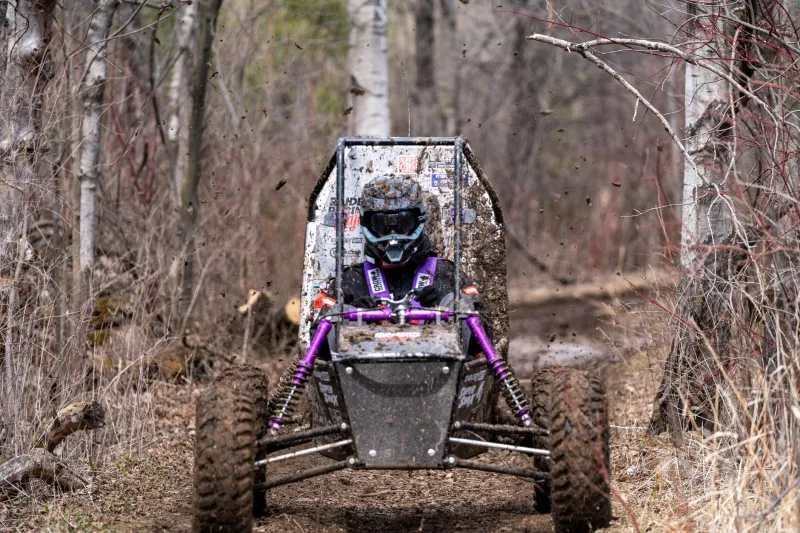
There's a particular smell that old-school British off-roaders talk about. Damp canvas, two-stroke exhaust, and the kind of axle grease that never fully washes out of your hands. It's the smell of a scene finding itself — raw, improvised, and absolutely glorious.
Long before the buggy community had forums, Facebook groups, or YouTube build diaries, it had ingenuity. Blokes in draughty garages across the Midlands, Wales, and the Scottish Borders were welding together machines that had no right to work as well as they did. And somehow, those machines became the foundation of everything we love about British off-roading today.
This is a story about those vehicles. Where they came from, what they meant, and — crucially — where some of them ended up.
The 1970s: When It All Started Getting Interesting
The British buggy scene in the 1970s was, to put it charitably, chaotic. Volkswagen Beetle floorpans were the chassis of choice for many early builders, partly because they were cheap and partly because the rear-engined layout made for surprisingly capable off-road geometry. Builders in Cornwall and Devon were particularly active, using the terrain on their doorstep to stress-test whatever they'd cobbled together that weekend.
One of the most talked-about machines from that era is a VW-based buggy known informally as the "Dartmoor Rat" — a stripped-back, tube-framed thing that spent most of the late seventies being thrashed across the moor by its original owner, a retired mechanic from Tavistock called Gerald Horne. Gerald passed away in 2019, but his son David still has the buggy. It's sitting in a barn near Okehampton, partially dismantled but largely intact.
"Dad never called it anything special," David told us over the phone. "He just called it 'the buggy.' But people who saw it run in those days still talk about it. It was ahead of its time — he'd worked out suspension geometry that most people weren't thinking about until the nineties."
The Dartmoor Rat isn't unique in that sense. Across the country, there are dozens of machines from this era quietly rusting in agricultural buildings, their histories half-remembered by ageing enthusiasts and their influence largely unacknowledged.
The 1980s: Professionalism Creeps In
By the early eighties, the scene had started to organise itself. Green lane driving was booming, off-road clubs were forming across England and Wales, and the machines were getting more sophisticated. The influx of Japanese 4x4s — your Suzuki SJ series, early Daihatsu Fourtracks — gave builders new donor vehicles to cannibalise, and the results were often spectacular.
Somewhere in a lock-up near Sheffield, there's a buggy that competed in more northern green lane runs during the 1980s than almost any other vehicle still in existence. Its current owner, a woman called Trish Barker who bought it from an estate sale in 2017, has been painstakingly restoring it for the last six years.
"It had been used as a chicken coop for about fifteen years before I got it," she says, laughing. "The cage was still bolted to what was left of the floor. But underneath all of that was this incredible chassis — proper fabrication work. Whoever built it knew exactly what they were doing."
Trish has managed to trace the buggy back to a fabricator in Rotherham who was apparently well-known in the local off-road community during the eighties. "People remember him," she says. "They just can't quite remember his name."
That anonymity is part of what makes this history so hard to document. These weren't famous builders. They weren't running businesses or entering televised competitions. They were just people who loved driving hard terrain and were good with a welder.
The 1990s: The Scene Finds Its Voice
The nineties brought with them a more defined British buggy identity. Publications like Off Road and 4 Wheel Drive were documenting builds in a way that created a genuine culture of aspiration. Suddenly, builders weren't just making machines for themselves — they were making them to be seen, photographed, and talked about.
Some of the most celebrated builds from this decade are still actively driven today. A buggy built in 1994 by a then-twenty-two-year-old fabricator from Wrexham named Owen Parry has become something of a cult object in Welsh off-road circles. Owen is now in his early fifties and still drives the machine at events, though he's rebuilt it several times over the years.
"The original engine is long gone," he admits. "The chassis has been repaired more times than I can count. But the design is the same. The geometry I worked out in my dad's garage when I was a kid — that's still there. That's the bit I won't change."
Owen's buggy has directly influenced at least a dozen other builds he knows of, with builders contacting him to ask about his suspension setup and roll cage geometry. "That's the thing about this community," he says. "Knowledge gets passed on. Maybe not formally, but it gets passed on."
The Early 2000s: Refinement and Revival
As the millennium turned, the British buggy scene entered a period of consolidation. Some of the wilder experimentation of the previous decades gave way to more refined, purpose-built machines. The influence of American desert racing began filtering across the Atlantic, and builders started thinking about longer-travel suspension, better weight distribution, and more serious safety standards.
Some of the most impressive machines from this era are still competing in events today — albeit with significant upgrades. A buggy built in 2001 by a fabricator in Northumberland has won multiple club-level events in the north of England over the past decade, driven by its original builder's daughter, who took over the machine in 2018 and hasn't looked back.
Why Any of This Matters Now
You might be wondering why we're digging through history when there are fresh builds being finished in garages across Britain every weekend. The answer is simple: the machines that came before are why the current scene looks the way it does.
Today's builders are standing on the shoulders of people who had no instruction manual, no community forum, and no YouTube tutorial. They figured it out through trial and error, through blown engines and bent chassis rails, through weekends spent in freezing conditions learning what worked and what absolutely didn't.
Every design choice you see in a modern British buggy — the roll cage angles, the suspension geometry, the way builders think about weight transfer on loose terrain — has roots in those early machines. The Dartmoor Rat. The Sheffield chicken coop survivor. Owen Parry's Wrexham creation.
They're not just old vehicles. They're the foundation of something that's still very much alive.
If you've got a vintage buggy with a story, or you know where a significant early build is hiding, we'd love to hear from you. This history is worth preserving — and it's disappearing faster than most people realise.