Estate Engines: How Britain's Urban Off-Road Clubs Are Changing Lives One Muddy Mile at a Time
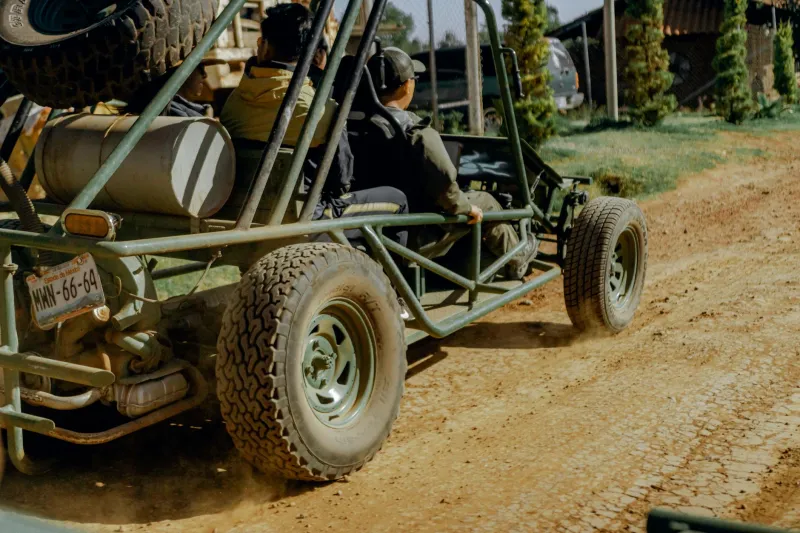
The sound echoes off concrete tower blocks at 7am sharp: two-stroke engines firing up in a car park behind Coventry's Hillfields estate. To most residents, it's just another noise in a neighbourhood that's seen plenty. To the fifteen teenagers gathered around a collection of battered buggies, it's the sound of possibility.
Welcome to Wheels of Change, one of Britain's most unlikely success stories. In a city better known for automotive decline than innovation, this urban off-road club is proving that sometimes the best youth intervention comes with knobby tyres and a healthy dose of controlled chaos.
From Joyriding to Joy Riding
"We started because the alternative was watching these kids nick cars," explains Danny Morrison, the club's founder and a former Jaguar production worker who's seen Coventry's automotive industry rise and fall. "Give them something legal to thrash, teach them how it works, and suddenly you've got mechanics instead of miscreants."
The transformation isn't instant or universal, but the statistics speak volumes. Of the 127 young people who've passed through the club's doors since 2018, 89% have avoided any contact with youth justice services. More significantly, 34 have progressed to automotive apprenticeships, and twelve are now working in the motor trade.
Seventeen-year-old Marcus Johnson represents the club's potential perfectly. Two years ago, he was facing exclusion from his third secondary school. Today, he's rebuilding a 1990s Suzuki LT250 quad while studying for his motorcycle mechanics qualification at Coventry College.
"First time I came here, I thought these lot were mental," Marcus grins, wiping grease from his hands. "Who builds race cars in a car park? But Danny showed me how to strip an engine, and it just clicked. Same skills that get you in trouble can get you out of it, if you point them right."
The Rhondda Rebels: Mining Heritage Meets Modern Thrills
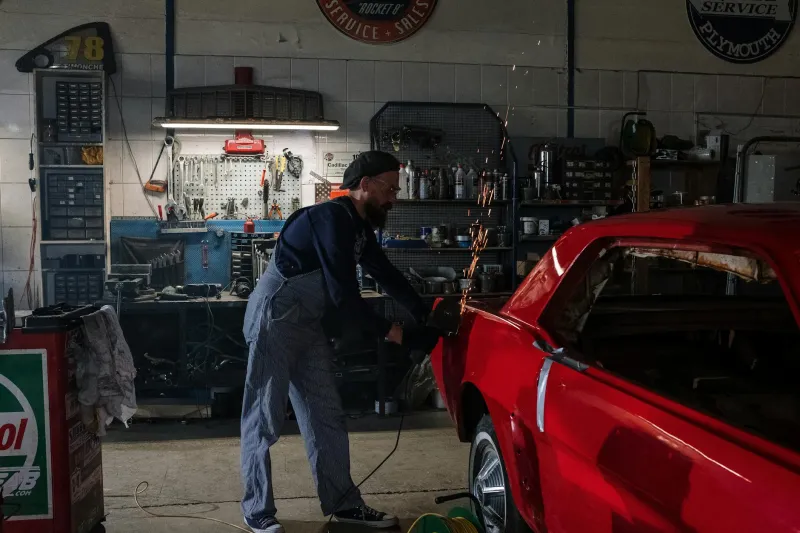
Four hours west, in the former mining community of Treorchy, another urban off-road revolution is taking shape. The Rhondda Valley Motors Club operates from a converted chapel, its stained glass windows now overlooking a workshop where teenagers learn to fabricate roll cages and tune carburettors.
 Photo: Rhondda Valley, via c8.alamy.com
The club's origins trace back to 2019, when local councillor and former miner Gareth Davies noticed increasing numbers of young people riding stolen motorbikes around the valley's abandoned industrial sites. Rather than demand more police patrols, Davies had a different idea.
"These valleys produced some of Britain's finest engineers," Davies explains, gesturing toward faded photographs of the local colliery. "Mining required mechanical skill, problem-solving, and teamwork. The industry's gone, but the need for those skills hasn't."
The club's approach blends practical education with community service. Members restore donated vehicles that are then used for local charity events, from sponsored runs to emergency response training with mountain rescue teams. The combination of technical challenge and community purpose has attracted funding from unexpected sources.
Rhondda Cynon Taf Council now contributes £18,000 annually to the club's operations, while the Welsh Government's Communities First programme provides additional support for mental health initiatives. The club's waiting list currently stands at 23 young people — a problem Davies describes as "the right kind of headache."
Breaking the Stereotype
Both clubs challenge assumptions about who participates in off-road culture. At Wheels of Change, 40% of members are female, while the Rhondda club runs dedicated sessions for young people dealing with anxiety and depression.
"People think off-roading is just blokes with too much testosterone and not enough sense," observes Sarah Chen, a youth worker who coordinates the mental health programme in Treorchy. "But there's something therapeutic about mechanical work. It's problem-solving with your hands, immediate feedback, and genuine achievement when you get it right."
The therapeutic aspect isn't accidental. Both clubs work with local mental health services to identify young people who might benefit from hands-on activities. The combination of physical challenge, technical learning, and peer support has proven particularly effective for teenagers struggling with traditional classroom environments.
Fifteen-year-old Chloe Williams joined the Rhondda club after a difficult period following her father's redundancy from the local steelworks. "I was angry all the time, getting into fights at school," she explains while adjusting the suspension on her project buggy. "But you can't stay angry when you're trying to work out why an engine won't start. It forces you to think differently."
The Funding Challenge
Success brings its own problems. Both clubs struggle with demand that outstrips resources, while insurance costs and safety requirements create ongoing financial pressure. The specialised nature of their work — combining youth services with automotive activities — doesn't fit neatly into traditional funding categories.
"We're too mechanical for the youth charities and too social for the motorsport grants," Morrison explains. "But that's exactly why we work. We're filling a gap that nobody else even recognised existed."
Innovative funding solutions are emerging. The Coventry club has partnered with local automotive businesses to provide work experience placements, while members' restored vehicles are hired out for film and television work. The Rhondda operation has developed a sideline in custom fabrication, with club members producing roll cages and suspension components for the wider off-road community.
Lessons for the Future
The success of these urban off-road clubs offers lessons that extend beyond their immediate communities. They demonstrate how automotive culture can serve social purposes while maintaining its essential character of innovation and adventure.
Key factors in their effectiveness include strong local leadership, partnerships with existing services, and focus on genuine skill development rather than simple entertainment. Both clubs emphasise progression pathways that lead to employment or further education, ensuring that participation creates lasting change rather than temporary distraction.
Perhaps most importantly, they've maintained the authentic spirit of off-road culture. These aren't sanitised youth programmes with motors bolted on; they're genuine automotive communities that happen to serve social purposes.
"We don't try to hide what we are," Davies reflects. "We build fast cars, we drive them in muddy places, and we have a bloody good time doing it. The fact that it also keeps kids out of trouble and teaches them valuable skills is brilliant, but it's not why we exist. We exist because building things and driving them is fundamentally human."
As both clubs plan expansion — Coventry is exploring satellite locations in Birmingham and Leicester, while Treorchy considers franchising their model to other Welsh valleys — they face the challenge of scaling success without losing authenticity.
The teenagers working on their projects in converted chapels and estate car parks might not realise it, but they're participating in something historically significant: the evolution of British automotive culture from pure recreation to community resource. In an age of increasing social division, perhaps there's something profound about young people from different backgrounds united by the simple pleasure of making things go fast in muddy places.
The engines are still firing up at 7am sharp. The difference is what happens next.