The Last Hurdle: Making Sense of the IVA Test for British Buggies
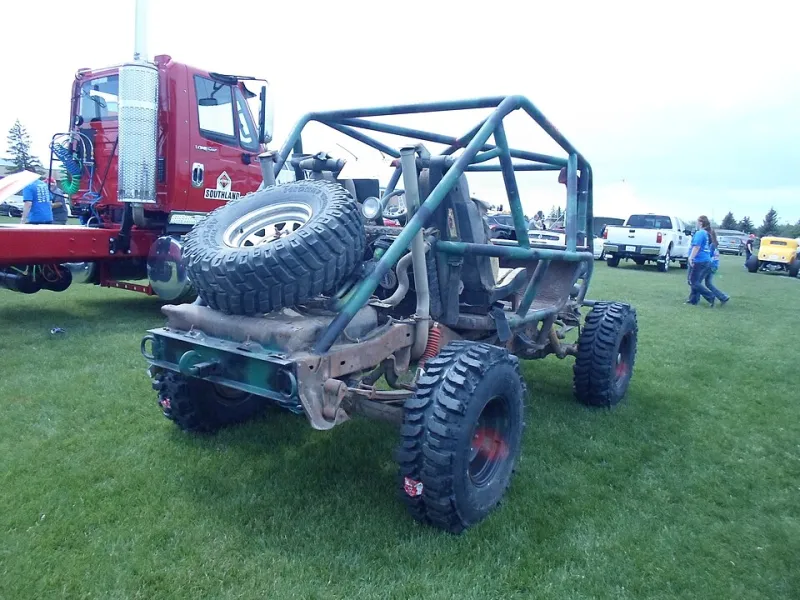
Photo: dave_7 from Lethbridge, Canada, CC BY 2.0, via Wikimedia Commons
There is a moment in every garage build when the spanners go down and the paperwork comes out. The buggy runs. The welds look tidy. The brakes bleed up. Then someone says the words that strike fear into every home builder: individual vehicle approval. In the UK, the IVA test is the line between a very expensive toy and a road-legal machine. In 2026, it remains the final hurdle, and it is one that catches out plenty of otherwise brilliant builds.
What the IVA actually is
The Individual Vehicle Approval scheme is run by the DVSA. It exists for vehicles that do not have a European or UK type approval, which is most buggies, kit cars, and one-off builds. The test is not a general safety inspection like an MOT. It is a conformity check against a set of technical requirements covering construction, lighting, brakes, steering, and more. You are essentially proving that your build meets the same broad standards as a factory vehicle, even though it was made in a lock-up in Lincolnshire.
For buggies, the relevant category is usually light vehicle or passenger car depending on the design and seating. The exact classification matters, because it shapes the test fee, the emissions requirements, and the equipment list. Get it wrong early and you can spend months chasing the wrong specification.
What inspectors are really looking at
An IVA inspector is not there to admire your fabrication. They are working through a checklist. The big areas are:
- Lighting and signalling. Headlamp aim, beam pattern, indicators, brake lights, rear fog, reflectors, and the dreaded sharp edges around lamp housings.
- Brakes. Efficiency, balance, and the condition of pipes and hoses. A buggy that stops fine on grass can still fail a rolling road test.
- Steering and suspension. Play in the system, secure mountings, and no components that look like they could let go at speed.
- Sharp edges and projections. This is where tube buggies often struggle. Every exposed edge, bolt, and bracket needs to be radiused or covered.
- Seat belts and anchorage points. The mounting must be strong and correctly positioned. Homemade tabs with a single weld will not impress.
- Vehicle identification number. A clear, permanent VIN in the right place, plus documentary evidence of its allocation.
- Noise and emissions. This is where engine choice really matters. A modern Japanese engine with a catalytic converter is a far easier conversation than a tuned carb-fed lump.
- Mirrors, speedometer, and glazing. Simple items, but easy to overlook when you have been focused on suspension travel.
The failure points that catch builders out
The most common IVA failures are rarely dramatic. They are small, boring, and entirely preventable. Loose wiring that rubs on a chassis tube. A brake pipe that is not clipped properly. A headlamp that points at the treetops. A fuel line that runs too close to the exhaust. A seat belt bolt that is the wrong grade. Sharp edges on a bash plate. A horn that sounds like a dying pheasant.
Then there is the paperwork. Builders turn up with a folder of receipts and a hopeful expression, but the inspector needs a clear trail. Donor vehicle documents, proof of ownership of major components, and a sensible build record all help. If the history looks vague, the test can stall before it starts.
Costs and timelines in 2026
The IVA test fee is not the whole story. Budget for the test itself, a possible retest, transport to and from the test centre, and any pre-test inspection or alignment work. Many builders also pay for a professional once-over before the real thing, which is often money well spent. The total can easily run into four figures once travel, trailer hire, and time off work are included.
Timelines are unpredictable. Test slots vary by centre, and a failed test can push you back by weeks. The smart approach is to book only when the buggy is genuinely finished, not when you are 90 percent done and hoping. The last 10 percent is where IVA failures live.
How to avoid a second test
Start with the manual. The IVA inspection manual is long, but it is the only honest guide to what is required. Work through it section by section and photograph everything. Build a checklist and tick it off as you go. Pay particular attention to lighting aim, brake pipe routing, sharp edges, and seat belt mountings, because those are the areas where home-built vehicles most often come unstuck.
Get a second pair of eyes. A local kit car club or an experienced MOT tester can spot things you have gone blind to. And do not leave the paperwork to the night before. The inspector can only approve what they can verify.
The IVA is not an enemy. It is the reason your buggy can legally use a B-road on a Sunday morning. Treat it as part of the build, not an afterthought, and the last hurdle becomes a lot less daunting.