Sand Rails on British Shores: The Desert Racer That's Perfect for Our Peculiar Terrain
Mention 'sand rail' to most British off-road enthusiasts, and you'll get blank stares or dismissive comments about American desert toys. It's a criminal oversight. While we obsess over heavy, overbuilt machines designed to carry the kitchen sink across the Sahara, we're ignoring one of the purest expressions of off-road performance – machines that could transform how we experience Britain's diverse terrain.
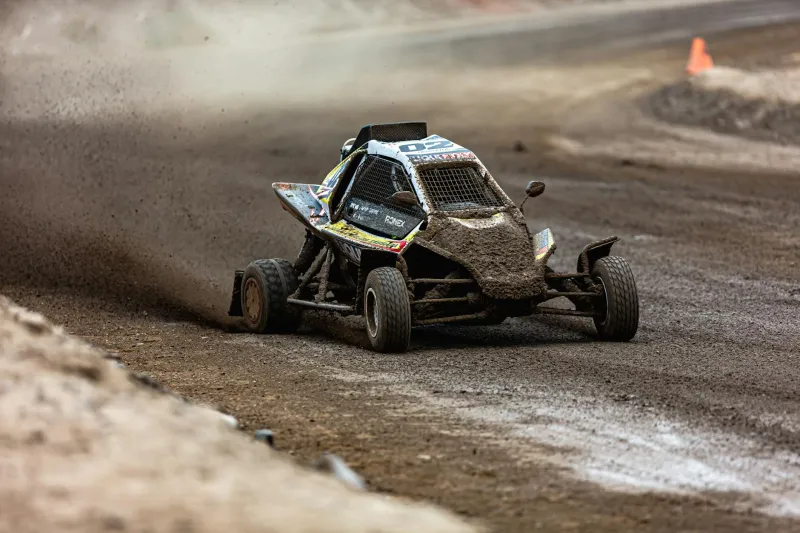
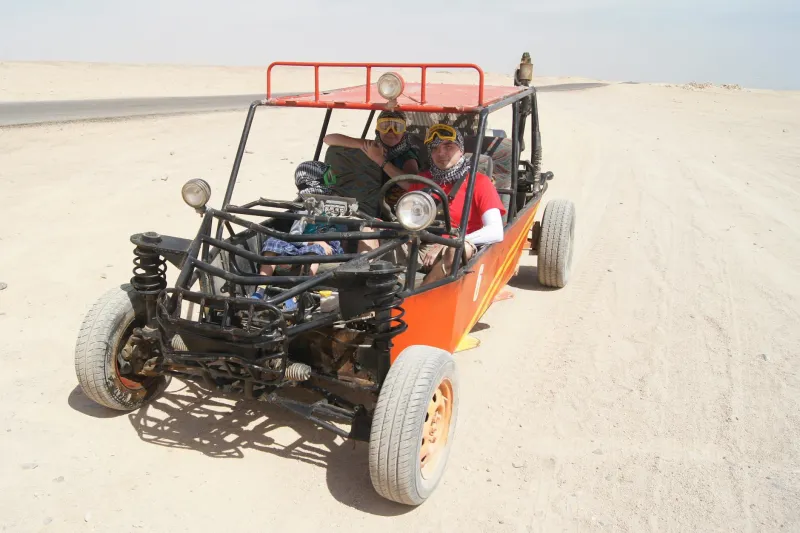
The sand rail philosophy strips away everything non-essential. No doors, minimal bodywork, just a lightweight tubular chassis housing the most powerful engine you can afford, wrapped around the longest-travel suspension physics will allow. It's the automotive equivalent of a thoroughbred racehorse – bred for one thing: speed across challenging terrain.
But here's the thing – that challenging terrain doesn't have to be endless sand dunes.
Why Britain Needs More Sand Rails
Our island geography creates incredibly diverse driving environments within relatively short distances. From the shifting sands of Norfolk's coast to the rocky moorland of Dartmoor, from Scottish forest tracks to Welsh mountain passes – this variety actually favours lightweight, adaptable machines over heavy, specialised ones.
Consider the typical British off-road day out. You might start on tarmac, transition to gravel forest tracks, tackle some technical rocky sections, maybe hit some muddy bridleways, and end up on coastal dunes if you're lucky. A traditional 4x4 compromises on every surface to be adequate on all. A sand rail excels on most and absolutely flies on several.
The weight advantage is massive. While a typical off-road prepared Land Rover weighs north of two tonnes, a properly built sand rail barely breaks 800kg. That means less environmental impact, better fuel economy, and the ability to dance across surfaces that would bog down heavier machines.
The British Sand Rail Pioneer
To understand how sand rails translate to British conditions, I spent an afternoon with Mark Thompson, a mechanical engineer from Derbyshire who's been running a home-built sand rail for three years. His machine started life as a Volkswagen Beetle – the traditional sand rail donor – but evolved into something uniquely adapted to British conditions.
"Everyone said I was mad building a desert racer in the Peak District," Thompson laughs, adjusting his helmet before our test drive. "But they miss the point. It's not about the sand – it's about the philosophy. Minimum weight, maximum fun."
Thompson's machine runs a 2.0-litre VW air-cooled engine producing around 150bhp – modest by modern standards, but in a sub-800kg package, it provides genuine performance. The suspension uses long-travel coilovers with nearly 12 inches of wheel travel, allowing the machine to absorb terrain features that would stop conventional vehicles.
On Derbyshire's limestone trails, the difference is immediately apparent. Where heavier machines struggle with loose surfaces and steep gradients, the sand rail simply floats across obstacles. The combination of low weight and long suspension travel means it can tackle technical sections at speeds that would be suicidal in conventional off-roaders.
Coastal Perfection
Britain's extensive coastline offers some of the world's best sand rail territory, yet it remains largely unexploited. From the expansive beaches of Northumberland to the dune systems of North Wales, we have thousands of acres of perfect sand rail terrain.
The Norfolk coast particularly showcases sand rail potential. The combination of firm sand, rolling dunes, and technical sections through marram grass creates natural racetracks that rival anything in California's Imperial Valley. Yet on most weekends, these areas see only the occasional quad bike or trial bike.
Thompson's coastal experiences highlight the sand rail's versatility: "The first time I hit Brancaster beach, I understood what these machines were really about. It's not just speed – though they're properly quick on sand – it's the connection to the terrain. You feel every contour, every change in surface. It's pure."
Forest Track Revelation
Perhaps surprisingly, British forest tracks prove ideal sand rail territory. The Forestry Commission's extensive network includes thousands of miles of gravel tracks that perfectly suit lightweight, high-performance machines.
In the Forest of Dean, Thompson demonstrates the sand rail's forest credentials. The combination of flowing gravel tracks and technical climbs creates a natural rally stage. The machine's low centre of gravity and responsive handling transform mundane forest service roads into genuine adventure routes.
"Traditional 4x4s treat forest tracks like obstacles to overcome," Thompson explains. "Sand rails treat them like racetracks to enjoy. Completely different mindset."
The Import Challenge
Building or importing sand rails in Britain faces unique challenges. Most American sand rail manufacturers focus on pure off-road machines that can't be road registered. For British use, where accessing off-road areas often requires road travel, this creates complications.
Several routes exist for determined enthusiasts. Kit car regulations allow home-built machines to achieve road registration, though the process requires patience and paperwork. Alternatively, some American manufacturers offer "street legal" versions designed for states with lenient vehicle regulations.
The parts availability situation is improving. While traditional VW air-cooled components remain the foundation of most builds, modern alternatives using Honda, Subaru, or even motorcycle engines are gaining popularity. These powerplants often provide better power-to-weight ratios while maintaining the reliability essential for British conditions.
Beyond the Beach
The sand rail's potential extends far beyond coastal driving. Britain's moorland offers thousands of square miles of terrain that perfectly suits lightweight, high-performance machines. The combination of firm, well-drained surfaces and sweeping open landscapes creates natural speedways.
Dartmoor's granite tors and heather-covered slopes provide technical challenges that showcase sand rail capabilities. The ability to tackle steep, rocky sections at speed, then flow across open moorland, demonstrates the versatility that makes these machines special.
Similarly, the Scottish Highlands' extensive track network offers sand rail paradise. The old military roads and stalkers' paths provide high-speed routes through some of Britain's most spectacular scenery.
The Community Question
Perhaps the biggest challenge facing British sand rail adoption isn't technical – it's cultural. The British off-road scene remains deeply conservative, favouring proven machines over innovative approaches. Sand rails challenge this mindset, demanding a different approach to off-road driving.
But change is coming. Younger enthusiasts, influenced by social media exposure to international off-road scenes, are increasingly interested in alternatives to traditional 4x4s. The sand rail's combination of performance, simplicity, and pure driving experience appeals to this new generation.
Thompson believes the tipping point is approaching: "Once people experience what these machines can do on British terrain, the prejudices disappear. It's not about copying American desert racing – it's about creating something uniquely British."
The Future of British Sand Rails
As environmental concerns increasingly influence off-road vehicle design, the sand rail's inherent efficiency becomes more relevant. Lower weight means less environmental impact, better fuel economy, and reduced wear on sensitive terrain.
Electric sand rails represent particularly interesting possibilities for British conditions. The instant torque delivery suits sand rail driving styles, while the reduced noise levels could open access to areas currently restricted due to sound concerns.
Several British engineering companies are exploring electric sand rail concepts, recognising the potential for machines that combine zero-emission operation with genuine off-road performance.
The sand rail deserves serious consideration from British off-road enthusiasts. Not as a direct copy of American desert racers, but as inspiration for machines uniquely adapted to our diverse terrain. In a country where variety is the norm and adaptability is essential, the sand rail philosophy offers genuine advantages over traditional approaches.
It's time British off-road culture embraced the sand rail. Our peculiar terrain demands it.