The Magic Happens in Ordinary Places
Behind the corrugated iron doors of a Derbyshire lock-up, Dave Matthews is performing automotive alchemy. What started as a Category B write-off Ford Mondeo three months ago is now taking shape as a fearsome-looking buggy, complete with a custom-fabricated roll cage that would make a Formula One engineer weep with pride.
"People think you need a factory and millions of pounds to build something proper," Dave grins, running his hand along a perfectly welded seam. "Truth is, all you need is a welder, some decent steel, and the bloody-mindedness to see it through."
Dave's not alone. Across Britain, a quiet revolution is taking place in garages, sheds, and industrial units. Amateur fabricators are stripping donor vehicles down to their bare bones and rebuilding them as purpose-built off-road weapons. The results? Machines that regularly embarrass far more expensive factory buggies at regional competitions.
The Art of the Donor Hunt
The first challenge for any shed builder is finding the right donor vehicle. It's part treasure hunt, part mechanical archaeology. Popular choices include written-off hot hatches, elderly 4x4s, and anything with a decent gearbox and differential setup.
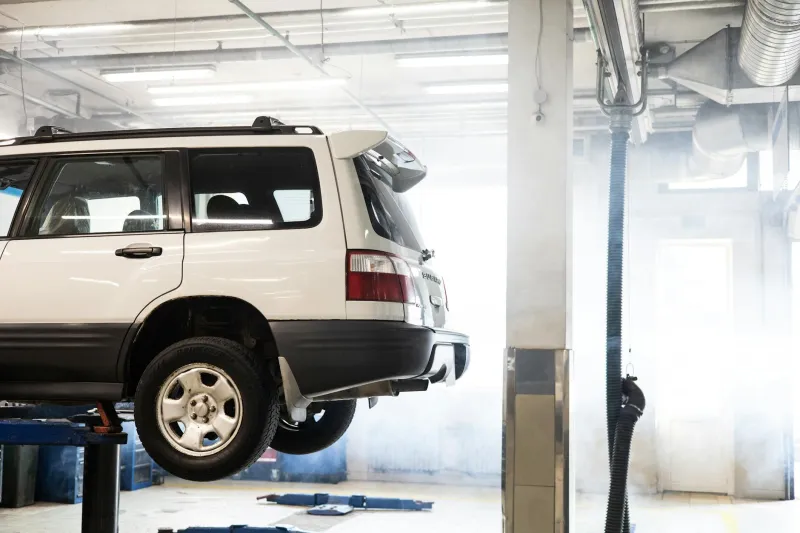
"I've built three buggies now, and each one started life as something completely different," explains Sarah Jenkins from her workshop in rural Wales. Her current project began as a crashed Subaru Impreza. "The beauty of a Category B write-off is that it's structurally damaged but the running gear is usually sound. Perfect for what we're doing."
The donor hunt has created its own subculture. WhatsApp groups buzz with grainy photos of potential candidates spotted in scrapyards. Auction sites are monitored religiously. Some builders maintain relationships with local recovery firms, getting first dibs on interesting write-offs.
Engineering on a Shoestring
What separates the successful home builders from the dreamers is their ability to solve complex engineering problems with simple solutions. Take Dave's approach to suspension mounting points. Rather than buying expensive fabricated brackets, he's adapted standard Sierra parts, modifying them with careful cutting and welding.
"It's all about understanding what each component actually does," he explains, pointing to his creation. "A suspension mounting point is just a bracket that holds everything in the right place. Doesn't matter if it started life on a family saloon."
The ingenuity extends to every aspect of the build. Exhaust systems are cobbled together from universal parts and careful bending. Electrical looms are simplified and re-routed. Interior trim is stripped out entirely, replaced with racing harnesses and minimal switchgear.
Costs are kept ruthlessly low through creative sourcing. Roll cage tubing comes from industrial suppliers rather than motorsport specialists. Wheels and tyres are hunted down at tyre depot clearance sales. Even paint is often sourced from agricultural suppliers – "Tractor paint is tough as nails and half the price," notes Sarah.
The Community Spirit
What makes the British home-build scene special isn't just the mechanical creativity – it's the community that's grown around it. Knowledge is shared freely through forums, Facebook groups, and weekend gatherings. Experienced builders mentor newcomers, lending tools and expertise.
"When I was struggling with the rear axle setup, three lads from the local group turned up on a Saturday morning with a hydraulic press and sorted it in an hour," remembers first-time builder Mark Thompson from Essex. "Try getting that kind of help from a main dealer."
Regional build-offs have become legendary events where these shed-built machines get their first taste of proper abuse. The atmosphere is more village fete than corporate motorsport – bacon butties from a mobile van, informal scrutineering, and genuinely helpful advice flowing freely between competitors.
Testing Time: Where Dreams Meet Reality
The moment of truth comes when these garage-built monsters face their first proper off-road trial. Some builders choose gentle introductions at local pay-and-play sites. Others dive straight into competitive events, reasoning that you might as well find out what breaks sooner rather than later.
"First time out was terrifying," admits Dave. "You're thinking about every weld, every bolt, wondering if it's going to hold together. But when you're flying over a jump that would make a Range Rover think twice, and everything stays attached... that's when you know you've built something special."
The success rate is surprisingly high. These home-built machines regularly outperform expensive factory alternatives, often because they're designed specifically for the terrain they'll face. A buggy built for Peak District limestone quarries will have different priorities to one destined for Welsh forest trials.
Beyond the Build: A Growing Movement
What started as individual projects is evolving into a recognised part of British motorsport. Several home-built machines have progressed from weekend fun to serious competition, taking on professionally prepared vehicles and winning.
The appeal extends beyond just the mechanical satisfaction. For many builders, it's about proving that innovation and determination can triumph over deep pockets. It's a very British approach to motorsport – make do, adapt, and show the establishment how it's really done.
"There's something deeply satisfying about building your own machine," reflects Sarah, watching her Subaru-based creation tackle a steep climb. "Every component has been chosen, every weld placed with purpose. When it works, it's not just a machine – it's an extension of yourself."
For anyone considering joining this growing movement, the advice from experienced builders is simple: start with a clear vision, budget for twice as long as you think it'll take, and don't be afraid to ask for help. The British shed-building community is always ready to welcome another convert to the cause.