The Unlikely Connection
When 27-year-old Jake Morrison first watched his grandfather navigate a near-vertical Highland outcrop during the Scottish Six Days Trial, he wasn't thinking about buggies. The Glaswegian mechanical engineer was mesmerised by something else entirely: how a machine weighing barely 100kg could dance up terrain that would challenge a Land Rover.
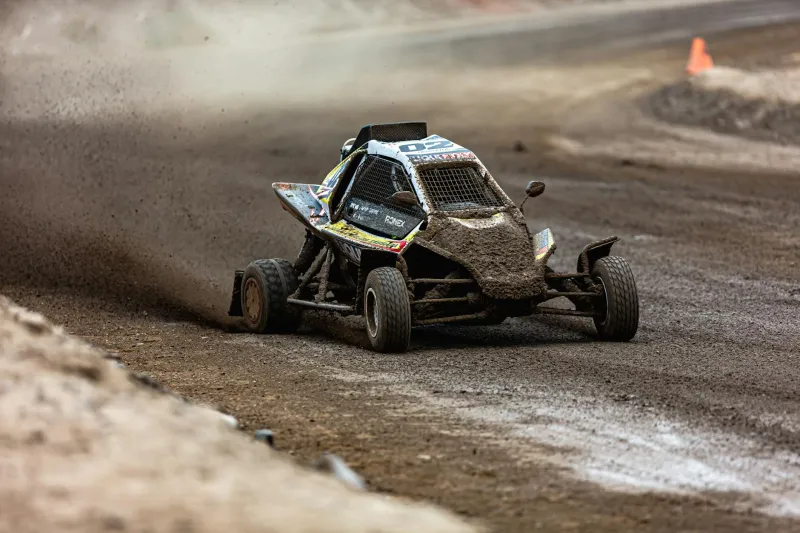
Three years later, Morrison's workshop in Paisley houses something that would make trials purists raise an eyebrow—a stripped-down, single-seater buggy that weighs just 180kg and climbs like a mountain goat. His creation represents a growing movement among Britain's youngest off-road enthusiasts, who are mining trials riding's century-old wisdom to build buggies that redefine what's possible on our challenging terrain.
"Trials taught me that weight is the enemy," Morrison explains, running his hand along the chromoly tube frame that forms his buggy's skeleton. "Every gram matters when you're trying to thread between boulders or balance on a ridge line. The old trials lads figured this out decades ago—we're just applying it to four wheels instead of two."
The New School Revolution
Morrison isn't alone in this pursuit. Across Britain, a network of builders under 30 are creating machines that blur the lines between traditional buggies and trials bikes. In Cumbria, 24-year-old Emma Hartley has built what she calls a "trials buggy"—a featherweight machine with independent suspension travel that would make a Trophy Truck jealous.
"I grew up watching the Scott Trial," Hartley says from her workshop near Kendal. "Those riders make impossible climbs look effortless because they understand momentum and precision. I wanted to capture that in a buggy—something that could pick its way through the Lake District's gnarliest sections without needing brute force."
Hartley's machine tips the scales at just 165kg and features a bespoke suspension system inspired by trials bike geometry. The result is a buggy that can literally hop over obstacles, using techniques borrowed directly from two-wheeled trials riding.
Engineering Heritage
The Scottish Six Days Trial, first held in 1909, represents the oldest form of organised off-road motorsport. For over a century, it has challenged riders to navigate Scotland's most unforgiving terrain with machines that prioritise finesse over power. This philosophy—that skill and engineering elegance trump raw horsepower—is exactly what's inspiring Britain's new generation of buggy builders.
"Trials riding is pure problem-solving," explains Dr. Sarah Mitchell, a motorsport historian at Edinburgh University who has studied the Trial's influence on vehicle development. "These young buggy builders are essentially applying trials principles to four-wheeled platforms. It's evolutionary engineering in action."
The numbers support this evolution. Where traditional buggies often exceed 400kg, these trials-inspired machines rarely break 200kg. Power outputs are modest—typically 50-80bhp—but power-to-weight ratios that would embarrass supercars.
Technical Innovation
The engineering challenges are substantial. Creating a four-wheeled vehicle that matches a trials bike's agility requires rethinking fundamental assumptions about suspension, weight distribution, and power delivery.
28-year-old Cardiff-based builder Tom Jenkins has developed what he calls "active geometry"—a suspension system that adjusts its characteristics based on terrain input. "Trials bikes change their stance constantly," Jenkins explains. "The rider shifts weight, adjusts body position, modulates power. I wanted to build some of that adaptability into the chassis itself."
Jenkins' buggy features electronically controlled dampers that can switch from soft trail compliance to rock-hard precision in milliseconds. The system reads terrain through accelerometers and adjusts accordingly—technology that wouldn't look out of place on a Formula 1 car, applied to navigating Welsh slate quarries.
The Community Connection
What's particularly striking about this movement is how it's bridging generational gaps within Britain's off-road community. Many of these young builders actively seek mentorship from trials veterans, creating knowledge transfer that benefits both sides.
"The old-timers have techniques we're only just discovering," Morrison admits. "Line choice, momentum management, reading terrain—skills developed over decades of trials riding. They're incredibly generous with their knowledge."
This collaboration has led to informal gatherings where trials bikes and lightweight buggies share the same challenging terrain. Events like the Yorkshire Dales "Mixed Metal" weekends see two-wheeled and four-wheeled machines tackling identical sections, with riders and drivers learning from each other's approaches.
Future Horizons
The implications extend beyond individual builds. Several British manufacturers are taking notice of this grassroots movement. Ariel Motor Company, famous for their minimalist approach to automotive design, has reportedly been observing these developments with interest.
"This could reshape how we think about recreational off-road vehicles," suggests automotive journalist and former trials rider Mark Thompson. "If young builders can create machines that outperform traditional buggies at a fraction of the weight, the industry will have to take notice."
The movement also addresses practical concerns about access and environmental impact. Lighter machines cause less ground damage and open up terrain previously considered too sensitive for four-wheeled vehicles.
Preserving Tradition, Embracing Innovation
As these young builders push boundaries, they're also preserving something essential about British off-road culture: the spirit of making do, innovation born from limitation, and respect for the landscape that challenges them.
"We're not trying to replace anything," Hartley emphasises. "We're adding to the conversation. Trials riding will always be trials riding. But there's room for evolution, for taking those principles and seeing where they lead."
For Morrison, currently planning his third-generation design, the future looks increasingly vertical. "Next year's machine will weigh under 150kg," he grins. "My grandfather's going to think I've lost my mind. But I reckon he'll understand once he sees it climb."
In workshops across Britain, the sound of welding torches and the scratch of design sketches continue. The Scottish Six Days Trial may be over a century old, but its influence on the future of British off-roading is just beginning.