Gearbox Graveyard: The Transmission Swaps Saving Britain's Buggies from Breakdown Hell
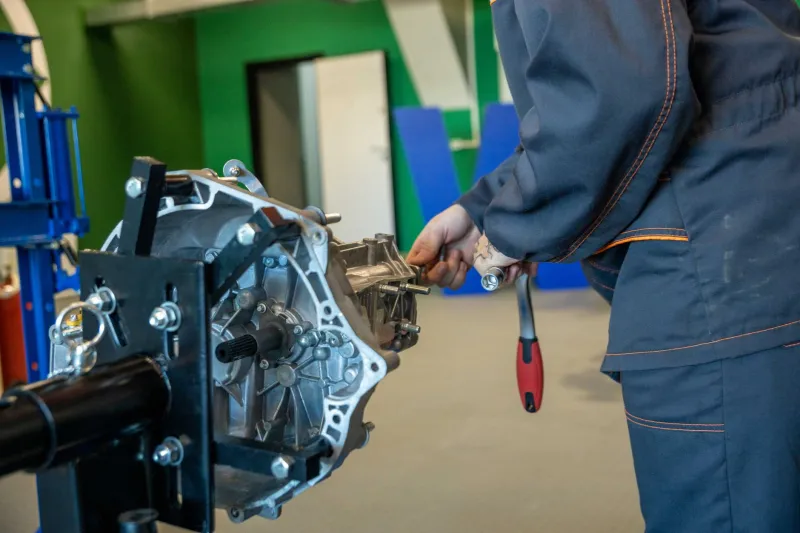
It always starts the same way. You're three miles into a green lane somewhere in the Brecon Beacons, the mud is properly biblical, and then you hear it — that grinding, crunching, soul-destroying noise from somewhere beneath your feet. The gearbox has given up. Again.
For a huge chunk of Britain's buggy scene, transmission failure isn't a worst-case scenario. It's practically a rite of passage. And increasingly, builders and weekend warriors alike are deciding they've had enough of the recovery truck lottery and are doing something drastic about it.
Transmission upgrades have quietly become one of the most hotly debated topics in UK off-road circles. Not suspension geometry. Not engine swaps. Gearboxes. Specifically, which ones won't leave you sobbing into a flask of Tetley on a rain-soaked hillside in Shropshire.
Why the Stock Box Always Loses
Most buggies — particularly the home-built variety that makes up the backbone of Britain's scene — start life borrowing their running gear from donor vehicles never designed for sustained abuse. A Rover SD1 gearbox, a Land Rover LT77, a knackered Ford Sierra unit sourced from a breaker's yard in Wolverhampton — these are the kinds of components that end up underneath machines being driven in ways their original engineers could never have imagined.
Dave Henshaw, who builds buggies out of a unit near Telford, has seen the consequences more times than he cares to count. "The problem isn't that these boxes are bad," he says. "They were fine for what they were built for. But you stick one behind a modified engine in a lightweight buggy, then spend a day doing rock crawling or deep ruts, and you're asking it to do something completely different. The shock loading alone will kill a tired box in an afternoon."
The failure modes are varied and spectacular. Snapped layshafts. Shattered selector forks. Synchromesh that simply dissolves under repeated low-speed, high-torque demands. And because many buggy builds are running uprated engines to compensate for their off-road ambitions, the stress on the drivetrain is compounded further.
The Cult of the Sequential
One of the most significant shifts in the UK buggy transmission conversation over the past five years has been the growing enthusiasm for motorcycle-derived sequential gearboxes. Originally the preserve of serious motorsport builds, these units have trickled down into the enthusiast market at a price point that — while still eye-watering — is no longer completely insane.
Sequential boxes from manufacturers like Hewland, Sadev, and a handful of smaller UK-based engineering outfits offer a fundamentally different approach to gear selection. There's no H-pattern to fumble with in the heat of a technical section. You push forward or pull back, and the box does exactly what you ask, every single time.
More importantly, they're built for abuse. Proper abuse. The kind of shock loading and torque spikes that destroy conventional synchromesh boxes are essentially a non-event for a properly specified sequential unit.
Luke Farrow, who runs a modified sand rail that he takes to events across the Midlands and North Wales, made the switch eighteen months ago after his third gearbox failure in two seasons. "I spent more on recoveries and replacement boxes in those two years than the sequential cost me," he says, with the weary authority of someone who has done the maths the hard way. "Now I don't even think about it. I just drive."
The Subaru Cult and Why It Makes Sense
Not everyone is in the market for a sequential. For builders working on tighter budgets — or simply preferring a more conventional driving experience — the Subaru transmission has emerged as something close to a consensus choice in the UK buggy community.
Subaru's all-wheel-drive systems, lifted wholesale from Impreza and Forester donor vehicles, offer a combination of relative affordability, reasonable parts availability, and a strength-to-weight ratio that suits lightweight buggies well. The five and six-speed units from the later turbocharged Imprezas in particular have developed a strong reputation for durability when used in converted applications.
The caveat, as always, is preparation. Running a Subaru unit without addressing the cooling requirements, and without ensuring the transfer case is properly integrated into the buggy's drivetrain layout, is a shortcut to the same failures you were trying to escape.
Kayleigh Marsh, who fabricates and sells buggy chassis from her workshop near Penrith, has built several Subaru-powered machines and is evangelical about the platform — but clear-eyed about its limits. "Do it properly and a Subaru box will take a serious amount of punishment," she says. "Cut corners on the installation and you'll be no better off than you were with whatever you had before."
The Gearbox Upgrade Decision Tree
So how do you actually decide what to fit? The honest answer is that there's no universal right answer, and anyone who tells you otherwise is probably trying to sell you something.
For light, low-powered buggies used primarily on green lanes and moderate off-road terrain, a well-sourced and properly rebuilt conventional gearbox — Land Rover R380, Toyota W58, or similar — can serve perfectly well. The key word is rebuilt. Fitting a used unit of unknown history is gambling, pure and simple.
For machines running serious power — anything north of 150bhp — or used in sustained technical off-road environments like rock crawling or competitive events, the calculus shifts considerably. Here, the Subaru route or a purpose-built sequential starts to make genuine financial sense when you factor in the cost of repeated conventional gearbox replacements.
And for anyone building a serious competition machine or a buggy that will regularly be pushed to its absolute limits, there really isn't a sensible argument against a sequential. The reliability premium pays for itself in avoided drama.
The Lesson the Hard Way
There's a particular kind of wisdom that only comes from standing in a field in January, waiting for a recovery truck, with a ruined gearbox and a long drive home ahead of you. Most of Britain's serious buggy builders have been there. The ones who've been there more than once tend to be the most emphatic advocates for doing the transmission upgrade properly.
The gearbox, more than almost any other single component, is where the gap between a reliable machine and a liability reveals itself. Get it right and you can focus entirely on the driving. Get it wrong and you'll spend your off-road weekends learning the recovery truck driver's first name.
The cult of the transmission upgrade isn't hype. It's hard-won experience. And in Britain's buggy scene, experience is the only currency that really counts.