Breaker's Yard Bonanza: Mining Britain's Automotive Graveyards for Off-Road Treasure
The Hidden Economy of Automotive Archaeology
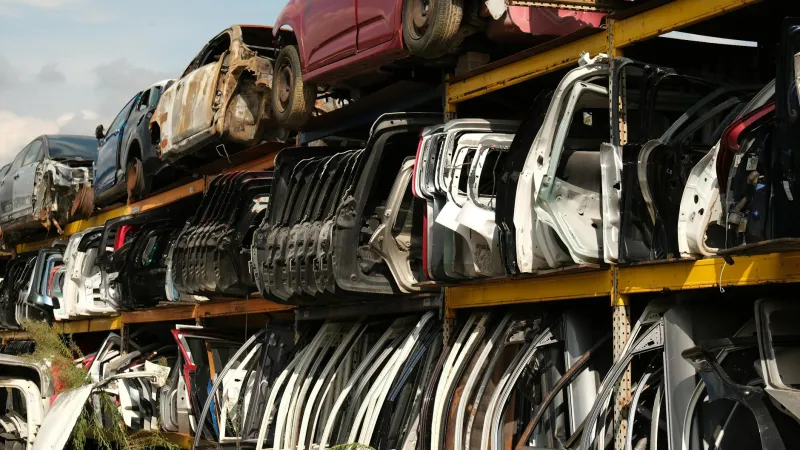
Every week, thousands of perfectly serviceable vehicles meet their end on Britain's roads – not through catastrophic failure, but through the simple economics of modern motoring. An MOT failure here, a minor electrical fault there, and suddenly a £20,000 car becomes a £500 collection of parts waiting for someone clever enough to recognise their potential.
For Britain's off-road community, these automotive graveyards represent something far more valuable than scrap metal: they're treasure troves of proven components that can be liberated from their mundane origins and transformed into competition-winning hardware.
The art lies in knowing what to look for, where to find it, and how to extract maximum value from vehicles that mainstream buyers have written off as worthless.
The Gospel According to Gearbox Gary
Gary Hutchinson runs a small empire from a nondescript industrial unit in Wolverhampton. To the untrained eye, his yard looks like automotive chaos: hundreds of vehicles in various states of dismantlement, engine blocks stacked like Lego bricks, and enough differential housings to stock a small factory.
 Photo: Gary Hutchinson, via garyhutchinson.co.uk
But Gary sees patterns where others see randomness. "Every vehicle tells a story," he explains, running his hands over a pristine Toyota Hilux axle destined for a competition buggy. "This came from a 200,000-mile pickup that failed its MOT on brake lines. Owner couldn't justify the repair cost, but look at this axle – it's barely run in."
Gary's client list reads like a who's who of British off-road competition. Championship-winning drivers who could afford any components they wanted, but choose salvaged parts because they offer proven reliability at fraction of new prices.
"The secret is understanding what wears out and what doesn't," Gary continues. "Bodywork corrodes, electrical systems fail, engines wear out. But axles, gearboxes, transfer cases – these components are built to last the vehicle's entire life. When the rest of the car gives up, these parts are just getting started."
The Salvage Hunter's Handbook
Successful scrapyard hunting requires knowledge that goes far beyond casual enthusiasm. The best hunters understand vehicle genealogy: which manufacturers shared components across different models, which generations of specific vehicles offer the strongest parts, and crucially, which apparently mundane family cars hide competition-grade hardware.
Take the humble Suzuki Jimny. Most people see a small, underpowered shopping car. Experienced builders see bombproof axles, bulletproof transfer cases, and gear ratios perfectly suited to technical off-road work. A written-off Jimny might cost £800 complete; new equivalents of its major drivetrain components would cost ten times that figure.
Similarly, crashed Isuzu Troopers offer some of the strongest differentials ever fitted to civilian vehicles. Land Rover Discoveries provide proven suspension components and transfer case assemblies that have conquered everything from Camel Trophy routes to Dakar stages.
The key is developing relationships with salvage yard operators who understand your requirements. Most yards receive far more vehicles than they can properly evaluate. Build trust with the right operators, and they'll call you before choice vehicles hit the general market.
Regional Specialisations and Hidden Gems
Britain's salvage industry has developed distinct regional characteristics that smart hunters exploit ruthlessly. Scottish yards see higher proportions of 4x4 vehicles due to rural requirements and challenging terrain. Welsh operations often specialise in commercial vehicle salvage, offering access to heavy-duty components impossible to source elsewhere.
The Midlands, with its automotive manufacturing heritage, generates unique opportunities. Prototype vehicles, pre-production models, and manufacturer development cars occasionally surface in local yards. These vehicles often carry experimental components or upgraded specifications never available to retail customers.
Northern England's industrial legacy creates different opportunities entirely. Commercial vehicle graveyards offer access to military-specification components, agricultural equipment provides robust hydraulic systems, and abandoned mining equipment yields heavy-duty transmissions capable of handling enormous torque loads.
Even London's congestion charge zone generates salvage opportunities. Ultra-low emission requirements force older vehicles out of the city, creating artificial write-offs of mechanically sound cars that simply can't meet modern emissions standards.
Legal Landscapes and Documentation Demands
Salvage hunting operates within complex legal frameworks that vary depending on vehicle classification and intended use. Road-going vehicles require proper documentation trails, while competition-only builds face different requirements entirely.
The DVLA's salvage notification system tracks vehicles through their final journey, but understanding these processes helps hunters identify opportunities and avoid problems. Category N (non-structural damage) vehicles often yield perfect mechanical components from cars written off for relatively minor issues.
Insurance companies operate their own salvage networks, often disposing of repairable vehicles simply because repair costs exceed arbitrary percentage thresholds. A £15,000 car might be written off for £8,000 worth of bodywork damage, leaving £7,000 worth of mechanical components available for salvage prices.
Proper documentation becomes crucial when sourcing components for road-legal builds. Engine changes require DVLA notification, while significant modifications might trigger Individual Vehicle Approval requirements. Understanding these processes before starting projects prevents expensive mistakes later.
The Economics of Intelligent Scavenging
Smart salvage hunting can reduce build costs by 60-80% compared to new component purchases, but only if approached systematically. Successful hunters develop detailed component databases, tracking which vehicles offer specific parts and monitoring price trends across different suppliers.
Timing matters enormously. End-of-month periods often see salvage yards offering better prices to clear stock before monthly reconciliation. Weather affects pricing too – winter months typically see higher 4x4 availability as accident rates increase and maintenance costs become prohibitive for casual users.
Volume purchasing creates additional opportunities. Buying complete vehicles for specific components often proves more economical than purchasing individual parts, even when 80% of the vehicle gets re-sold as scrap.
The most successful hunters treat salvage sourcing as long-term investment strategy rather than immediate gratification. They buy components when available and store them until needed, rather than waiting until projects demand specific parts.
Competition Pedigree from Scrapyard Origins
Some of Britain's most successful competition vehicles started life in salvage yards. The 2019 British Cross Country Championship was won by a buggy running a transmission from a crashed transit van, differential from a written-off Discovery, and suspension components from three different manufacturer sources.
The driver, Sarah Mitchell, estimates her championship-winning build cost less than £8,000 in total, including the salvaged donor chassis. "People assume competition success requires expensive components," she explains. "Actually, it requires the right components, properly prepared and intelligently applied. Salvage hunting taught me to understand vehicles at component level rather than just brand level."
 Photo: Sarah Mitchell, via ludwigcancer.princeton.edu
This component-level thinking transforms how builders approach projects. Instead of starting with specific vehicle platforms, successful salvage hunters design around available components, creating unique solutions that often outperform conventional approaches.
The Future of Automotive Archaeology
Electric vehicle adoption will eventually transform salvage hunting, but that transformation creates opportunities as well as challenges. Electric powertrains offer fewer serviceable components, but their supporting systems – cooling pumps, DC-DC converters, high-voltage contactors – have potential applications in off-road builds.
Meanwhile, internal combustion engine vehicles continue generating salvage opportunities at accelerating rates. Emissions regulations, ULEZ expansions, and changing consumer preferences create artificial obsolescence that benefits salvage hunters.
The most forward-thinking hunters are already positioning themselves for these changes, developing relationships with electric vehicle specialists and understanding how hybrid system components might be repurposed for off-road applications.
Embrace the Hunt
Salvage hunting represents more than just cost-saving strategy; it's a masterclass in automotive understanding that transforms casual enthusiasts into genuine engineers. Learning to evaluate components independently of their original applications, understanding failure modes and service life expectations, and developing the creativity to see potential where others see problems – these skills separate successful builders from weekend tinkerers.
The next time you pass a salvage yard, remember that behind those rusty gates lie the components for your next championship-winning build. You just need to know how to find them, evaluate them, and transform them into something extraordinary.
After all, the best off-road vehicles aren't built from catalogues – they're excavated from automotive archaeology sites by hunters smart enough to recognise treasure when they see it.


