Born in a Garage: Meet the New Wave of Builders Scratching Britain's Off-Road Itch from Bare Metal
Born in a Garage: Meet the New Wave of Builders Scratching Britain's Off-Road Itch from Bare Metal
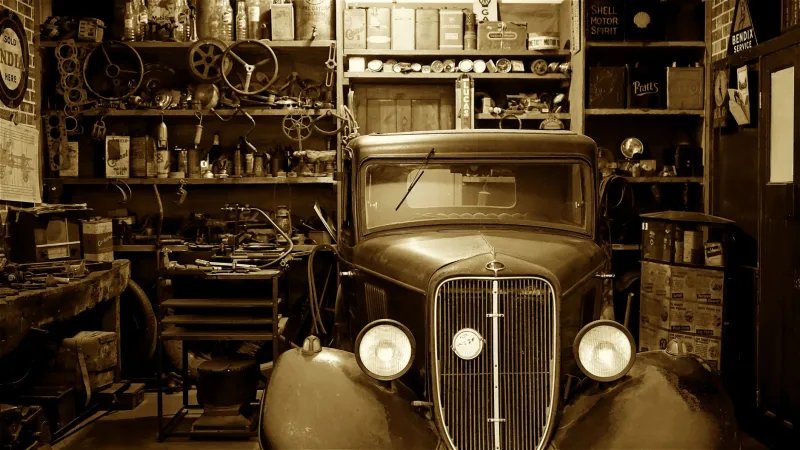
Somewhere in a terraced house garage in Sheffield, a 26-year-old is MIG welding a roll cage at half ten on a Tuesday night. In a rented unit outside Aberystwyth, a former IT contractor has stripped a Suzuki SJ down to its ladder frame and is rebuilding it around a hand-fabricated tube chassis. And in a shared workshop near Dundee, a group of mates who met on a Discord server are collectively building their first scratch-made buggy from plans that don't quite exist yet.
Britain's kit car tradition never really died — it just went quiet for a while. Now it's roaring back, driven by a generation of builders who grew up watching YouTube teardowns, who can source a Haynes manual for almost anything, and who are deeply unimpressed by the prices being asked for second-hand off-roaders in the current market. The result is a grassroots manufacturing revival that's producing some genuinely wild machines — and a community that's tighter and more collaborative than anything the kit car scene has seen in decades.
Why Now, and Why Off-Road
The economics are hard to argue with. Second-hand buggy and side-by-side prices have been climbing steadily, with decent used examples regularly fetching prices that would have seemed laughable five years ago. Supply chain disruption hit the new vehicle market hard and the ripple effects are still being felt. Meanwhile, raw materials — steel tube, donor mechanicals, second-hand suspension components — have remained accessible to anyone with patience and a decent relationship with their local scrapyard.
But it's not purely financial. There's a genuine cultural pull happening here, a reaction against the homogeneity of buying something off the shelf. The builders coming into this scene in their twenties and thirties grew up in a world of customisation — modified consoles, personalised phones, bespoke everything — and they're applying exactly that mentality to metal. Building your own off-roader isn't just cheaper (debatable, once you account for the hours); it's a statement.
Off-road specifically suits scratch building in a way that road cars don't. The regulatory environment is more forgiving in some respects — a vehicle that's only ever going to be used on private land or at events doesn't need to pass an MOT or meet road-going construction and use regulations in the same way. That opens the door to genuine experimentation with geometry, drivetrains, and body design that would be impossible in the road car world.
Jamie, Sheffield: The Minimalist
Jamie got into off-roading through a mate's Defender and spent two years convinced he needed to save up for something ready-made. Then he did the maths, watched approximately four hundred hours of American buggy build content on YouTube, and decided he was being daft.
"The thing that changed my mind was realising I wasn't trying to build a trophy truck," he says. "I just wanted something that would get me up a green lane and not die. That's actually not a complicated engineering problem."
His build — a lightweight tube-frame buggy running a 1.4-litre Ford Fiesta engine and a Suzuki SJ rear axle — cost him around £3,200 in parts over eighteen months. The chassis he fabricated himself after taking a weekend welding course at a local college. The bodywork is largely non-existent, which he considers a feature.
"People overcomplicate this. You need a strong frame, decent suspension travel, and an engine that won't leave you stranded. Everything else is aesthetics."
He's been running the finished machine at private land events in the Peak District for the past year and has already started a second build — this time for a friend, at a slight profit.
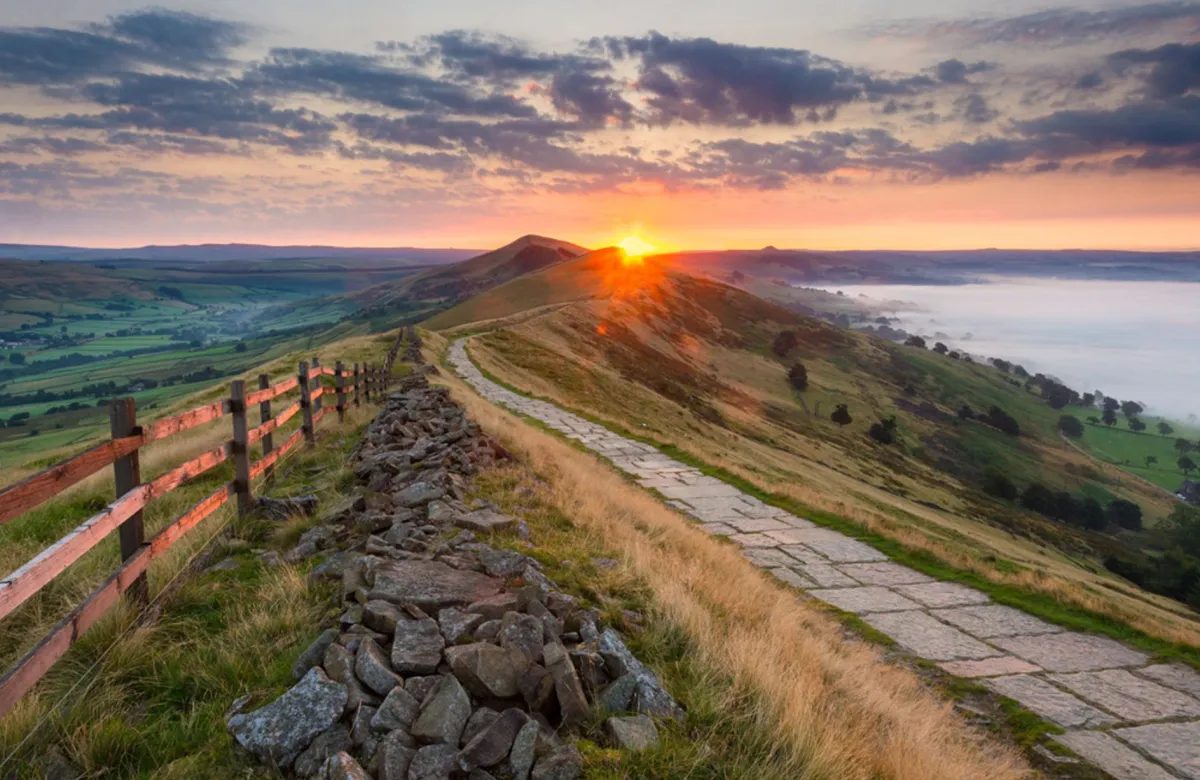 Photo: Peak District, via i2-prod.mirror.co.uk
Rhiannon, Aberystwyth: The Pragmatist
Rhiannon's background is in software, not engineering, and she'll be the first to tell you that the learning curve was brutal. Her build — a rebodied Suzuki SJ on a custom tube frame — took nearly two years and went significantly over her original budget.
"I budgeted £2,500. I spent closer to £4,800. And that doesn't include the tools I had to buy, or the parts I ruined learning how to do things properly."
What kept her going was the community. She found her people through a combination of a Welsh off-road Facebook group and the Locost builders forum — the latter a veteran of the British kit car scene that's been quietly running since the early internet era. Both communities, she says, are remarkably generous with knowledge.
"Nobody gatekeeps. You ask a stupid question, you get a proper answer. I asked about suspension geometry on a forum and had three experienced builders walk me through it over the course of a week. That kind of thing is invaluable when you're starting from nothing."
Her finished machine is built specifically for the wet, technical terrain around mid-Wales — long suspension travel, aggressive mud tyres, and a deliberately high seating position for visibility in dense vegetation. It looks unlike anything you'd buy off a showroom floor, because it was designed for exactly where she drives.
The Dundee Collective: Building by Committee
The group near Dundee — six people, ranging from 22 to 34, with a combined mechanical experience that they describe cheerfully as "not much" — represent perhaps the most interesting model in this revival. They're pooling resources, skills, and garage time to build a single machine that will be co-owned and shared between them.
"It makes the financial side much more manageable," says Callum, the group's de facto project lead. "But honestly, the main reason is that it's just more fun. Six people arguing about suspension setup is better than one person staring at a problem alone."
Their build is more ambitious than Jamie's or Rhiannon's — a twin-seat buggy with a mid-mounted motorcycle engine, designed for both green laning and private land sprint events. They're about eight months in and roughly halfway through the chassis work.
The YouTube rabbit hole, Callum admits, is real. "We've watched probably everything. American desert racing builds, Scandinavian rock crawlers, old British kit car content from the nineties. You pick up something useful from all of it. Then you figure out what applies to Scotland in November."
What It Actually Costs (Honestly)
The honest answer is: more than you think, less than buying ready-made, and completely dependent on your access to tools and donor vehicles. A realistic entry-level scratch build — simple tube frame, modest donor mechanicals, basic equipment — will land somewhere between £2,500 and £5,000 in parts. Add tools if you don't have them, and that number climbs. Add the inevitable mistakes and restarts, and it climbs further.
Time is the other currency. Eighteen months to two years of consistent weekend work is a reasonable expectation for a first build. The builders who go faster are usually the ones with prior fabrication experience or unusually well-equipped workshops.
What you get at the end, though, is something no amount of money can buy off a forecourt: a machine you understand completely, built exactly for where you drive, carrying the particular satisfaction of having made it yourself. In a scene that's always been about doing things your own way, that counts for rather a lot.


