Cold Blooded: Why the Hardest Off-Roaders in Britain Only Come Alive When the Temperature Drops
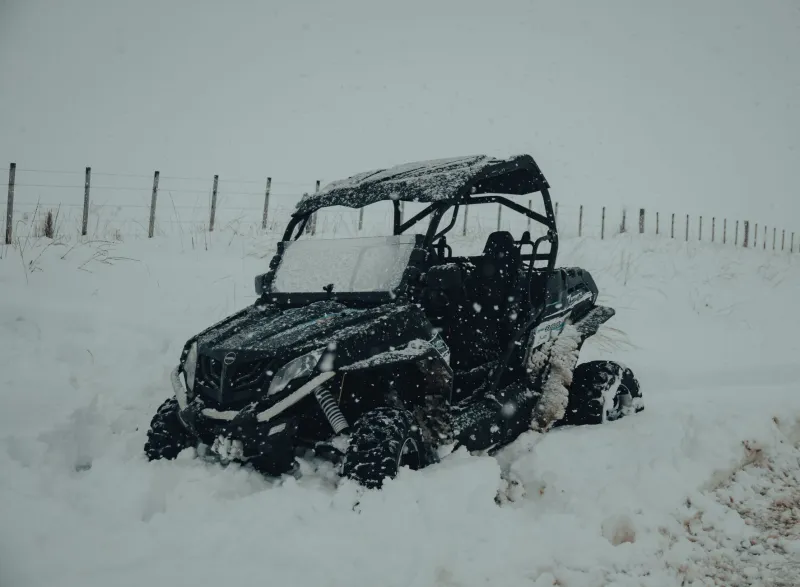
It's half six in the morning on a Tuesday in January. The temperature in the Elan Valley hasn't climbed above minus three overnight. There's a frost so thick it looks like snow, and the track ahead disappears into a mist that the weak winter sun hasn't yet bothered to shift. And sat in the cab of a stripped-out buggy, breath clouding around her, Jess Parkin is grinning like someone who has just been handed the keys to paradise.
"Summer off-roading is a day out," she says, without a trace of irony. "Winter off-roading is actually finding out what you're made of."
Jess has been running winter trails across mid-Wales for six seasons. She doesn't own waterproof gloves — she considers them unnecessary softness. Her buggy has a heater that technically works, but she rarely uses it because she claims the cold keeps her focused. She is, by any reasonable metric, exactly the kind of person who makes summer off-roaders feel slightly inadequate.
She is also far from alone.
Why Winter Changes Everything
The British off-road calendar has a curious inversion at its heart. The months when conditions are objectively most brutal — December through February, when rain, ice, and frozen ground conspire against both driver and machine — are also the months when the most serious practitioners consider the real season to begin.
The reasons are partly practical and partly philosophical. On the practical side, winter terrain in Britain genuinely behaves differently to its summer equivalent. Frozen ground that would be impassable bog in October becomes a firm surface capable of supporting a vehicle. Streams that run shallow in August run deep and fast in January, creating crossing challenges that test both nerve and preparation. Snow, when it falls on higher ground, transforms familiar routes into something genuinely demanding.
On the philosophical side, winter removes the casual element entirely. You can't nip out for a quick blast and be home for tea if something goes sideways on a frozen Welsh hillside. The stakes are real, the margin for error is smaller, and the requirement to think clearly and prepare properly is non-negotiable. For a certain type of off-roader, that's not a deterrent. It's the whole point.
"Anyone can have a good time in a field in July," says Marcus Webb, who runs a winter trail group out of the Yorkshire Dales. "Winter is where you find out if your vehicle prep is actually good enough and whether you actually know what you're doing. It's honest in a way that summer isn't."
Getting the Machine Ready
Winter off-roading in the UK places specific demands on vehicles that summer use simply doesn't replicate. Getting preparation wrong isn't just inconvenient — in genuinely cold, remote conditions, it can become a safety issue fairly quickly.
Fluids first. Engine oil viscosity matters more in cold starts than most people appreciate. If you're running a summer-weight oil and attempting a cold start at minus five, you're putting the engine under significant stress before it's had any chance to warm through. Check your manufacturer specifications and consider a winter-grade oil if you're operating regularly in sub-zero conditions.
Coolant antifreeze protection should be checked and not assumed. A coolant system that's fine in October may not be adequately protected if temperatures drop further than expected. A basic antifreeze tester costs almost nothing and takes thirty seconds to use.
Electrical systems. Cold weather is brutal on batteries, and a buggy with a marginal battery in summer is a buggy with a dead battery in January. If your battery is more than three years old and hasn't been tested recently, replace it before the season starts rather than after it fails three miles from the nearest road.
Water ingress into electrical connections is a year-round concern in off-roading, but winter exacerbates it. Check and treat key connectors with appropriate dielectric grease before the cold season, and pay particular attention to any connections near the underside of the vehicle.
Tyres and traction. The traction conversation in winter off-roading is more nuanced than it sometimes appears. Aggressive mud tyres that work brilliantly in summer conditions can actually underperform on frozen or icy terrain compared to tyres with a less extreme tread pattern. Hard compounds grip ice poorly regardless of tread depth.
For routes that regularly cross snow or ice, some winter trail regulars run dedicated winter off-road tyres or keep a set of tyre chains accessible. Chains are not glamorous, but on a genuinely icy descent, they are considerably more useful than anything else in your kit bag.
Reading Winter Terrain
The ground reads differently in winter, and developing the ability to interpret what you're looking at before you commit to a line is one of the skills that separates experienced winter drivers from those who end up stuck.
Frozen puddles are perhaps the most deceptive hazard. A puddle that has a solid-looking ice crust may have unfrozen water or soft ground beneath it. The ice crust will support the vehicle briefly, then give way suddenly — often at the worst possible moment in a line. Prod questionable surfaces on foot before committing the vehicle.
Snow depth is notoriously difficult to judge visually. A smooth, even snow surface can conceal dramatic variations in depth, rocks, ruts, or drop-offs. In unfamiliar terrain, this demands a much more cautious approach than the same route in summer conditions. If you don't know what's underneath, assume the worst.
Frozen ground that appears firm in the morning may soften significantly as the day progresses and temperatures rise. Routes that were perfectly manageable on the way in can become considerably more challenging on the way out if a mild afternoon has turned the surface to slop. Factor this into your timing.
The Kit That Keeps You Honest
Winter off-roading demands a recovery and survival kit that goes beyond the basics. The consequences of a breakdown or a stuck vehicle in cold, remote conditions are sufficiently serious that preparation should be treated accordingly.
A good quality sleeping bag and a foil emergency blanket take up almost no space and provide meaningful insurance if a recovery takes longer than expected and temperatures drop after dark. High-calorie food and a thermos of something hot are not luxuries in winter — they're basic sensible preparation.
Communication is more important in winter than at any other time of year. Mobile coverage in remote parts of Wales, Scotland, and the northern English uplands is patchy at best. A personal locator beacon or satellite communicator is worth serious consideration for anyone regularly driving remote winter routes alone.
Why It's Worth It
None of this is meant to be discouraging. The preparation overhead of winter off-roading is real, but so is the reward. Britain's upland landscapes in winter are genuinely spectacular in a way that summer simply can't replicate — the light is different, the colours are different, and the absence of other people creates a sense of space and remoteness that's almost impossible to find in the warmer months.
More than that, there's a specific satisfaction that comes from completing a challenging winter route in conditions that tested both you and the machine. Jess Parkin, back in the Elan Valley, puts it more simply.
"In summer, you finish a drive and think that was good fun," she says, finally conceding to a cup of tea from her flask. "In January, you finish a drive and think: we actually did that. It's a completely different feeling."
She's right. And that's precisely why the cold-blooded brigade wouldn't have it any other way.