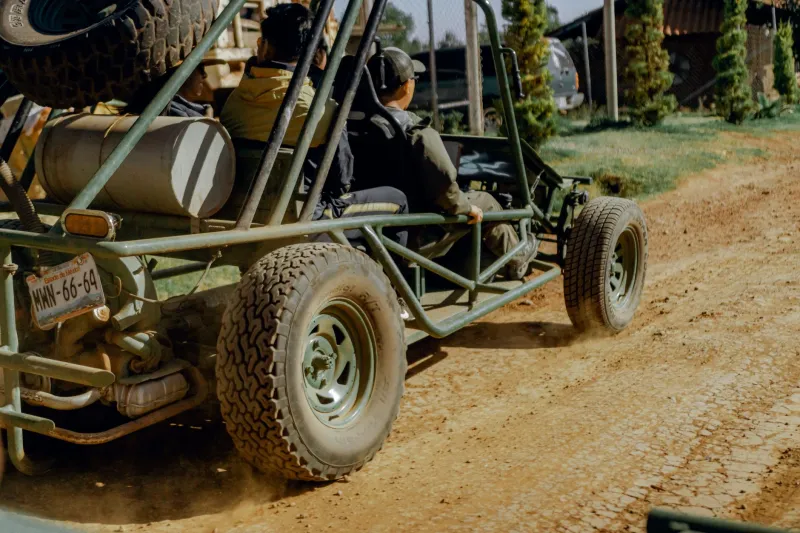
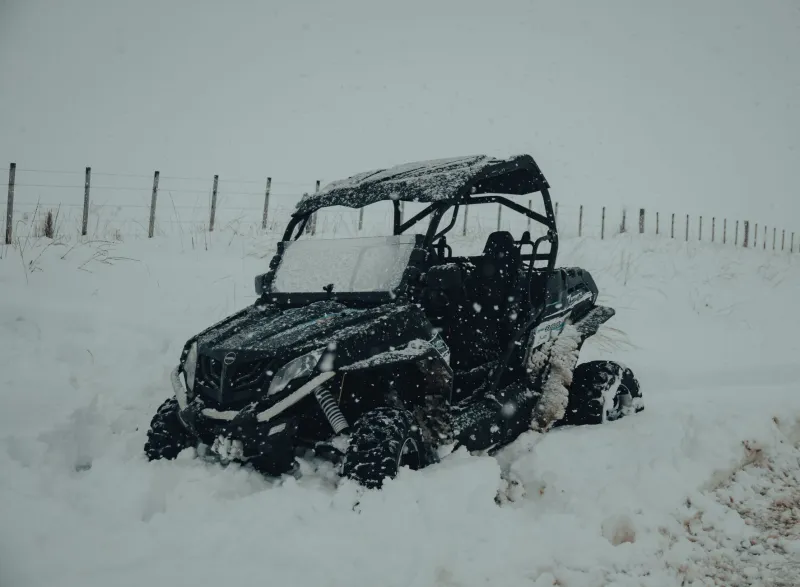
The Handshake Trails: How Britain's Serious Off-Roaders Are Quietly Building Private Land Networks
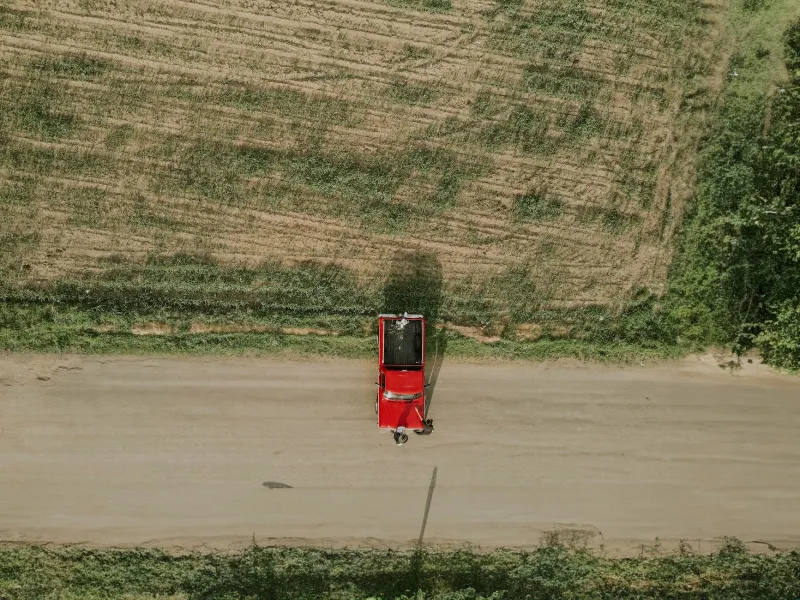
Nobody puts these trails on a map. There are no signs, no booking systems, no online reviews. The only way in is through a conversation—usually a careful one—and the only currency that matters is trust.
Across Britain, a quiet but significant portion of off-road driving happens on private land, arranged through informal agreements between landowners and enthusiasts. It's not secret, exactly. But it's not advertised either. And the people who've built these networks are understandably cautious about how much they share.
We spoke to a range of drivers, club organisers, and land access advocates to get an honest picture of how it works, what it costs, and what you need to know before you knock on a farmer's door.
Why Private Land Is Becoming More Valuable
The context matters here. The network of byways open to all vehicles (BOATs) and restricted byways that once formed the backbone of green lane driving has contracted significantly over the past two decades. Local authorities have closed routes, conditions have deteriorated on others, and the legal landscape around vehicular rights of way has become increasingly hostile.
Meanwhile, commercial off-road venues—while excellent—are finite in number, often booked solid at weekends, and can feel repetitive once you've done the same course a dozen times.
Private land fills the gap. A willing landowner with the right terrain can offer something no commercial venue can: variety, exclusivity, and the genuine sense of exploring somewhere that isn't on anyone else's itinerary.
"Once you've driven a proper private estate with no set route and no barriers, going back to a paid venue feels a bit like going to a theme park," says David Okafor, who organises access events for a club in the East Midlands. "Not that there's anything wrong with theme parks. But it's a different thing entirely."
Making the Approach
The first conversation with a landowner is everything. Get it wrong, and you've not just lost that opportunity—you've potentially poisoned the well for every off-roader who might have approached that person in the future.
The golden rule, according to everyone we spoke to, is to lead with respect and information, not with enthusiasm. Landowners aren't necessarily hostile to the idea of off-road access, but they have legitimate concerns: damage to land and crops, liability if someone gets hurt, and the risk that one group becomes a precedent for others to follow uninvited.
"The worst thing you can do is turn up unannounced with a group and ask if you can have a quick blast around the back field," says Sarah Tennant, a land access consultant who advises off-road clubs. "Go alone. Go in something sensible-looking. Have a clear explanation of what you want, how many vehicles, how often, and what you're willing to do in return."
That last point is crucial. Reciprocity is the foundation of most successful private access arrangements. Drivers who've built lasting relationships with landowners typically offer something tangible: help with fencing, assistance during difficult weather, a contribution to track maintenance, or simply a consistent presence that deters fly-tipping and trespass.
The Legal Landscape
Before you start knocking on farmhouse doors, it's worth understanding the legal framework—because landowners certainly will.
In England and Wales, driving a motor vehicle on private land without the landowner's permission is trespass. It's a civil matter rather than a criminal one in most circumstances, but it's still serious and can result in injunctions and damages claims. In Scotland, the Land Reform (Scotland) Act 2003 grants broader public access rights, but these explicitly exclude motorised vehicles.
For landowners granting access, liability is the big concern. The Occupiers' Liability Acts of 1957 and 1984 create a duty of care to visitors, and while that duty is reduced for trespassers, it applies more fully to invited guests. This is why any serious private access arrangement should involve a written agreement—however informal—and why insurance is non-negotiable.
"Every driver coming onto private land through our arrangements needs to show proof of their own public liability cover," says Okafor. "The landowner needs to know that if someone tips their buggy into a ditch and breaks an arm, there's a clear line of responsibility that doesn't end with them writing a cheque."
Some clubs have taken this further, arranging group liability policies that cover all members during organised private land events. It's an additional cost, but it's also the thing that makes landowners feel genuinely comfortable.
The Unwritten Codes
Beyond the legal framework, there's a set of informal rules that govern private land access—and violating them is the fastest way to lose what you've built.
Gate discipline is absolute. If it was closed when you arrived, it's closed when you leave. No exceptions. Damage gets reported immediately and made good promptly—not mentioned weeks later. Numbers are kept to what was agreed; showing up with twice the vehicles you promised is a serious breach of trust. And perhaps most importantly, the location stays within the group. Sharing coordinates on public forums, even with good intentions, can lead to uninvited visitors and the end of the arrangement.
"Word spreads in this community, but it spreads carefully," says Tennant. "The people who've built the best private access networks are also the most discreet about them. That's not an accident."
Building Something That Lasts
The most durable private access relationships, the ones that have run for years or even decades, share a common characteristic: both parties feel they're getting something worthwhile.
For landowners, that might be practical help, a sense of community, or simply the reassurance that their land is being visited by responsible people who'll notice and report problems. For off-roaders, it's access to terrain that no commercial venue can replicate.
Building that kind of relationship takes time—multiple conversations, demonstrated reliability, and a willingness to invest in the partnership before you ask anything of it. It's slower than booking a venue online. But the trails at the end of it are worth every handshake.