Know Before You Buy: The Warning Signs Hidden Inside Britain's Dodgiest Buggy Deals
The ad looks perfect. The photos are decent, the price is slightly lower than you'd expect but not suspiciously so, and the seller sounds knowledgeable enough over the phone. You drive three hours to look at it, and the vehicle seems solid. You buy it, drive it home, and start planning your first proper day out.
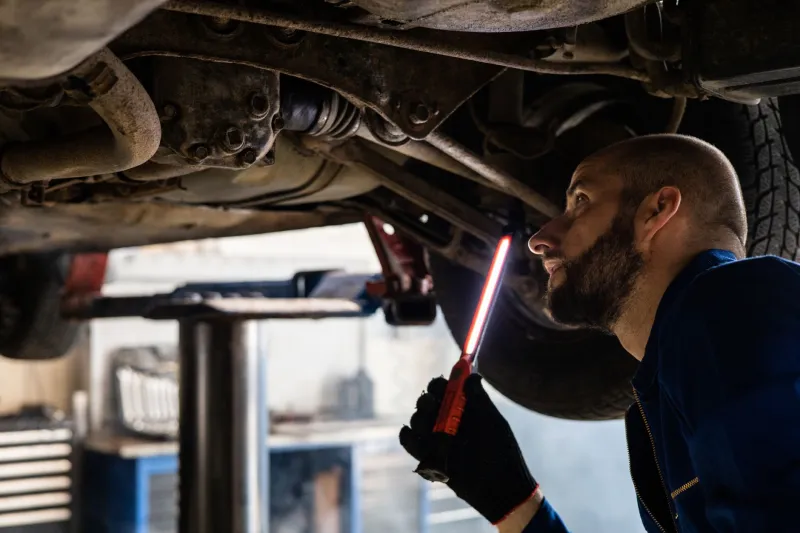
Then a mechanic friend takes a look underneath.
This is a story that's playing out with increasing frequency across Britain's off-road community, and the details are rarely pleasant. The second-hand buggy and off-road vehicle market has grown rapidly over the past several years, and where there's growth and money, there's always a percentage of people willing to exploit the gaps.
We spoke to mechanics, enforcement officials, and community members who've been caught out — or narrowly avoided being caught out — to put together the most honest guide we can to spotting a problem before it becomes your problem.
The Scale of What's Happening
To be clear upfront: the vast majority of buggy sales in the UK are legitimate. Most sellers are enthusiasts selling vehicles they've genuinely loved and maintained. But the market has expanded quickly enough that it's attracted operators who are less scrupulous, and the consequences of buying a dangerous or illegally assembled vehicle can range from expensive to genuinely life-threatening.
The issues broadly fall into three categories. First, there are cloned vehicles — machines built to look like a legitimate branded product but constructed using substandard or counterfeit components. Second, there are what the trade calls 'Frankenstein builds' — vehicles assembled from mismatched parts in ways that look plausible on the surface but have serious structural or safety compromises underneath. And third, there are straight-up counterfeit parts being sold as genuine, sometimes fitted to otherwise legitimate vehicles by sellers who may or may not know the difference.
"I see maybe two or three a year that genuinely alarm me," says Derek Ashworth, an independent mechanic near Shrewsbury who specialises in off-road vehicle preparation and has been working on buggies for over a decade. "Not just rough builds — I mean things where I genuinely don't know how the vehicle got to me without something catastrophic happening. Roll cages welded with the wrong rod, suspension geometry that would fold under real lateral load, brake systems that are essentially decorative."
The Cloning Problem
Brand-name buggies from established manufacturers carry a premium for good reason — engineering, testing, quality control, and parts availability. Cloning operations undercut that by producing vehicles that look similar enough to the genuine article to fool a casual buyer, while cutting corners on materials and construction that aren't immediately visible.
The most common targets for cloning tend to be popular models with a strong visual identity — vehicles that are recognisable and desirable. The exterior mimicry can be impressive. Badges, colour schemes, and body panel shapes are reproduced with enough accuracy that a non-specialist could easily be taken in.
The giveaways are usually in the details. Weld quality on genuine vehicles from reputable manufacturers is consistent and clean — you can see the care in it. Clone welds are often irregular, with spatter, porosity, or inconsistent penetration that a trained eye picks up immediately. The problem is that most buyers aren't looking at welds when they're excited about a purchase.
VIN plates are another red flag area. Legitimate vehicles have VIN numbers that can be cross-referenced with the manufacturer. If a seller is vague about provenance, or the VIN format doesn't match what the supposed manufacturer uses, that's a significant warning sign. In some cases, VIN plates are simply fabricated — a criminal offence in the UK, and one that enforcement agencies are increasingly alert to.
Frankensteining and Why It's Not Always Obvious
Not every problematic build is the result of deliberate deception. Some are the result of well-intentioned but underqualified builders who've assembled something genuinely dangerous without realising it.
Mismatched suspension components from different vehicle platforms, roll cages fabricated from the wrong grade of steel, braking systems with incompatible components — these issues often look fine at a glance. The vehicle might even perform adequately in light use. The failure modes tend to emerge under load, at speed, or in precisely the high-stress situations where you most need your vehicle to behave correctly.
"The roll cage issue is the one that keeps me up at night," says Ashworth. "People spec them for the look without understanding the engineering. The tube diameter, the wall thickness, the steel grade, the node geometry — all of it matters enormously. A cage that's built wrong isn't protective equipment. It's a hazard."
If you're looking at a vehicle with a roll cage, ask for documentation of the build specification. A legitimate builder should be able to tell you exactly what steel they used, what grade, and why. Vagueness here is a red flag.
The Counterfeit Parts Market
Separate from whole-vehicle fraud is the growing problem of counterfeit parts entering the supply chain. Fake brake components, substandard bearings sold as genuine, and counterfeit fasteners have all been identified in the UK off-road parts market over recent years.
The counterfeit fastener problem is particularly insidious because the failure mode is invisible until it happens. Grade markings on bolt heads can be faked. A bolt that looks like a high-tensile unit but is actually mild steel will handle light loads fine and then shear under the kind of stress that a genuine bolt would absorb without complaint.
Buying parts from established, reputable suppliers significantly reduces this risk. The grey market — private sellers, certain online marketplaces, car boot sales — is where the problematic stuff tends to circulate. If the price on a set of brake components is dramatically below what you'd pay through a legitimate dealer, ask yourself why.
A Practical Checklist Before You Buy
Here's what to actually do when you're looking at a second-hand buggy or off-road vehicle:
Get a pre-purchase inspection from an independent specialist. Not the seller's mate — someone with no connection to the deal. Budget for this. It's cheap insurance against a very expensive mistake.
Check the VIN. Ask the seller to show you the VIN plate and cross-reference it with the manufacturer if possible. If they're reluctant, walk away.
Look at the welds. You don't need to be a welding expert to spot obviously poor work. Inconsistency, heavy spatter, visible gaps — these are visible to anyone who takes the time to look.
Ask for build documentation. Any legitimate custom builder should have records — receipts, spec sheets, photos from the build process. Absence of documentation isn't proof of wrongdoing, but it should make you cautious.
Research the seller. In a community as connected as Britain's off-road scene, reputations travel. A quick post in a relevant forum asking if anyone knows the seller can be surprisingly informative.
Trust your instincts. If something feels off — the seller is evasive, the paperwork doesn't quite add up, the price is a bit too good — it's usually worth listening to that feeling. There will always be another vehicle.
The Community Response
It's worth noting that Britain's off-road community is increasingly self-policing on this issue. Forum moderators and club officials are more alert to suspicious listings than they once were, and the culture of peer review — where experienced members will look over a prospective purchase for someone newer to the scene — is genuinely valuable.
The goal isn't to frighten people away from the second-hand market. Most deals are fine, most sellers are honest, and there's brilliant value to be found in a well-maintained used vehicle. The goal is to make sure you're one of the people who finds that value, rather than one of the people who learns an expensive lesson the hard way.