Pay to Play: The Rise of Private Land Deals and What They Mean for Britain's Off-Road Future
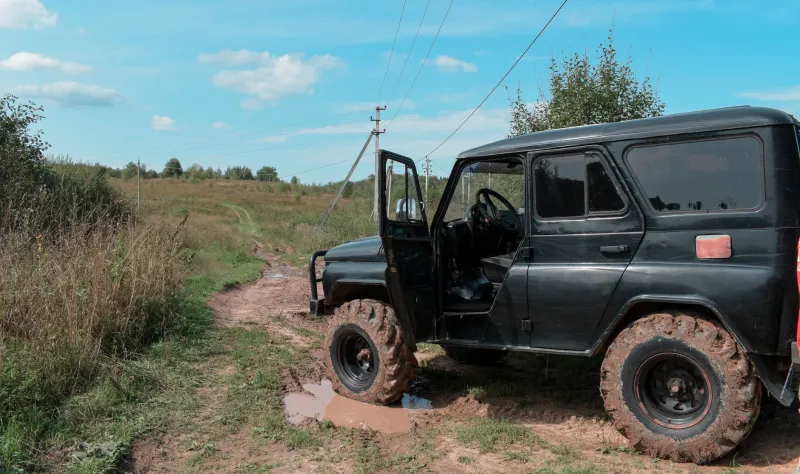
The gate is padlocked. There's no signage, no social media presence, no listing on any booking platform. You get the code from one person, and only if that person vouches for you. Behind the gate: twelve kilometres of private moorland trail, a working quarry section, two river crossings, and terrain that would make most commercial venues weep with envy.
This is the new frontier of British off-roading, and it's happening almost entirely below the radar.
Across the country — quietly, incrementally, one handshake at a time — a growing number of off-road enthusiasts are negotiating direct access agreements with private landowners. Farmers. Estate managers. Quarry operators. Forestry contractors. The deals vary enormously in structure, but the basic logic is consistent: exclusive or semi-exclusive access to genuinely challenging terrain, in exchange for money, maintenance work, liability cover, or some combination of all three.
How the Deals Get Done
The facilitators — the people who actually broker these arrangements — are an interesting breed. They sit at the intersection of the off-road community and the rural property world, fluent in both languages, trusted by both sides. Some fell into it accidentally, after a conversation with a neighbouring farmer turned into something more formal. Others have built it into a deliberate sideline business.
"The landowner's first question is always liability," explains one facilitator operating across the Welsh Borders. "They've heard horror stories. Someone rolls a vehicle, sues the estate, the whole thing becomes a nightmare. So the first conversation is always about insurance, indemnity, and who's responsible for what."
Once the liability question is settled — typically through a combination of participant insurance, a formal access agreement, and sometimes a trust structure — the commercial terms are surprisingly varied. Some deals run on annual retainers. Others charge per-session fees, often structured around group bookings. A few operate on a maintenance-trade basis, where regular access is exchanged for track upkeep, fencing work, or similar contributions to the land.
The terrain on offer is, in many cases, genuinely extraordinary. Green lanes and public bridleways are legally accessible but increasingly restricted and heavily used. Private agreements unlock land that has never been commercially operated — raw, unmarked, and entirely authentic.
The Two-Tier Problem
Not everyone is celebrating. Within the broader off-road community, the growth of private access deals has sparked a debate that gets uncomfortable quickly.
The concern, stated plainly, is this: premium private access is becoming the preserve of those who can afford it, while the public green lane network — already shrinking under pressure from local authorities and conservation bodies — absorbs everyone else. The result, critics argue, is a two-tier system. Money buys you the good stuff. Everyone else queues for the scraps.
"I've been doing this for twenty years on a working-class budget," says one green lane regular from the East Midlands. "I can't afford two hundred quid a day for private access. Neither can most of the lads I ride with. If the culture shifts entirely towards private arrangements, people like us get squeezed out."
The facilitators and landowners push back on this, with some justification. Private deals, they argue, actively reduce pressure on public routes. Every group that books a private estate is a group that isn't hammering a contested green lane. The commercial activity also gives landowners a financial reason to maintain and preserve terrain that might otherwise be fenced off or converted.
"I was about to put a wind turbine application in on the upper section," admits one estate owner in Northumberland. "The access deal changed that calculation. It's not a fortune, but it covers the maintenance and it means something's happening on the land. That matters to me."
What the Landowners Actually Want
Spend time talking to the landowners involved in these arrangements and a consistent picture emerges. They want certainty, respect, and minimum hassle. They are not, in most cases, primarily motivated by money — though money helps. What they want more than anything is to know exactly who is on their land, what they're doing, and that the whole thing won't blow up in their face.
This is why the access facilitators who succeed long-term are the ones who manage the relationship as carefully as the commercial terms. Regular communication. Immediate response when something goes wrong. Visible respect for the land and the landowner's other interests.
"I had one group who left a gate open," says an estate manager in Cumbria. "Just once. I called the facilitator. It was dealt with the same day — apology, explanation, guarantee it wouldn't happen again. That kind of response is why we're still working together three years later."
A Changing Landscape
The broader shift this represents goes beyond access economics. It reflects a maturation — arguably an overdue one — in how the off-road community relates to the land it uses.
Public green lanes exist in a legal framework that treats off-roaders as a right-holder navigating a system. Private agreements exist in a relationship framework, where access is earned and maintained through behaviour and trust. The second model, for all its inequalities, arguably produces better outcomes for the land and for the long-term reputation of the sport.
The challenge is making sure it doesn't become entirely exclusionary. Some facilitators are experimenting with tiered pricing, community booking days, and partnership arrangements with off-road clubs that make private access available to a wider membership base. It's early days, but the instinct — to preserve the grassroots character of British off-roading even as the premium end develops — feels like the right one.
The gate stays padlocked. But how many people can get the code, and on what terms, matters enormously for what British off-roading looks like in ten years' time.