Plugged Into the Mud: Can Electric Buggies Survive a British Winter?

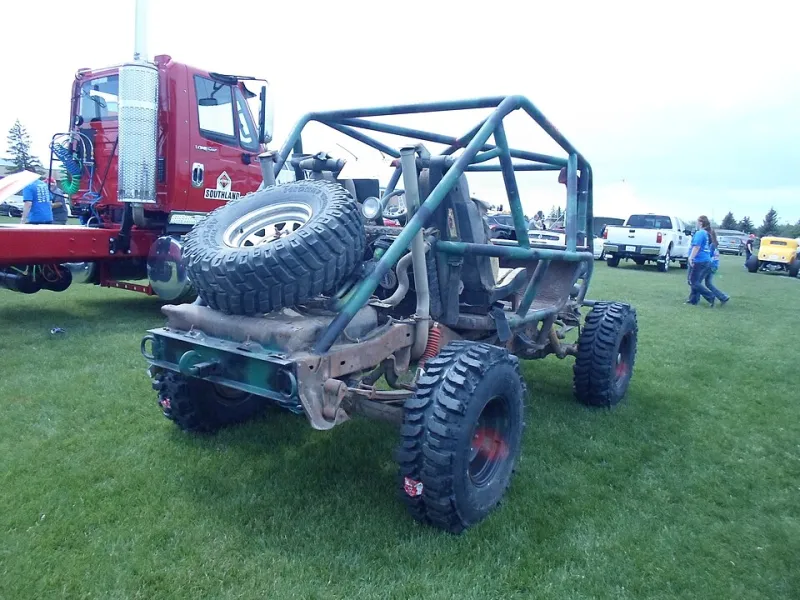
Photo: Ceeseven, CC BY-SA 4.0, via Wikimedia Commons
Electric off-roaders have been promised for years. The pitch is simple: instant torque, fewer moving parts, silent running, and the ability to crawl over obstacles with the precision of a scalpel. On paper, an electric buggy makes a lot of sense. In a British winter, paper gets wet.
The promise versus the puddle
Electric motors deliver maximum torque from zero rpm, which is exactly what you want when you are negotiating a muddy climb or easing over a rock step. There is no clutch to slip, no gearbox to argue with, and no exhaust to drown out the spotter. For technical off-roading, the control is genuinely excellent.
The problem is that off-roading in Britain is not a laboratory test. It is water, grit, salt, and mud that finds every seam. It is long days in low temperatures. It is a vehicle that may sit for a week and then be asked to winch a mate out of a bog. Electric buggies are improving, but the gap between a demo day and a December green lane is still real.
Waterproofing: IP ratings and reality
Most electric components carry an IP rating, but IP67 does not mean immortal. It means protected against dust and temporary immersion under specified conditions. It does not mean the connector will survive a pressure washer, a deep ford, or a winter of grit spray. Builders need to think about every joint, every breather, and every low-mounted cable.
Batteries are the big concern. A pack that is sealed well enough for a road car may not be happy with repeated dunks in muddy water. Thermal management systems, cooling lines, and venting all add complexity. If water gets into the wrong place, the results range from annoying to catastrophic. The best electric buggies are not just converted road cars. They are designed around sealed enclosures, high-mounted components, and serviceable connectors.
Range anxiety in a cold climate
Cold weather reduces battery performance. That is not a British problem alone, but Britain adds its own flavour: short winter days, lights on, heaters running, and mud that increases rolling resistance. A buggy that claims 100 miles on a warm day might see a significant chunk of that disappear in January.
For local green lanes and pay-and-play sites, that may be fine. For a full day out in the hills, it demands planning. Builders are responding with larger packs, but weight is the enemy of off-road performance. More battery means more mass, which means more strain on suspension, brakes, and recovery points. There is no free lunch.
Charging where there is no socket
This is the quiet killer. Petrol and diesel can be carried in cans. Electricity cannot be casually decanted into a jerrycan. If you are camping off-grid or exploring a remote trail in mid-Wales, you need a plan. Some owners use generators, but that undermines the silent advantage. Others rely on campsite hook-ups or return-to-base runs.
The charging network is improving, but it is still built around roads, not trails. A buggy on a trailer can be charged at home. A buggy on a multi-day adventure needs a different mindset. Until portable power and remote charging improve, electric off-roading will remain best suited to day trips and sites with infrastructure.
Salt, corrosion, and the long game
British winters are brutal on metal. Electric buggies add a new dimension: high-voltage systems and corrosion do not mix. Salt spray can creep into connectors, terminals, and motor housings. A petrol buggy might survive a rusty chassis for years. An electric one can be sidelined by a corroded contactor.
Owners need to be disciplined about cleaning, inspection, and dielectric grease. Builders need to route cables where they will not sit in a puddle. The long-term reliability of electric off-roaders will depend as much on packaging as on battery chemistry.
The verdict for 2026
Electric buggies are no longer a fantasy. The torque is real, the control is excellent, and the technology is improving fast. But they are not yet a straight swap for a diesel or petrol build in every British context. For low-mileage local play, site work, and owners with secure charging, they make sense. For remote winter expeditions and deep-water fording, the smart money is still on a combustion engine and a jerrycan.
The mud is not going anywhere. Neither is electric off-roading. The question is whether you want to be an early adopter or a patient one.