Volts in the Valley: Can Electric Buggies Actually Hack It on Britain's Wildest Trails?
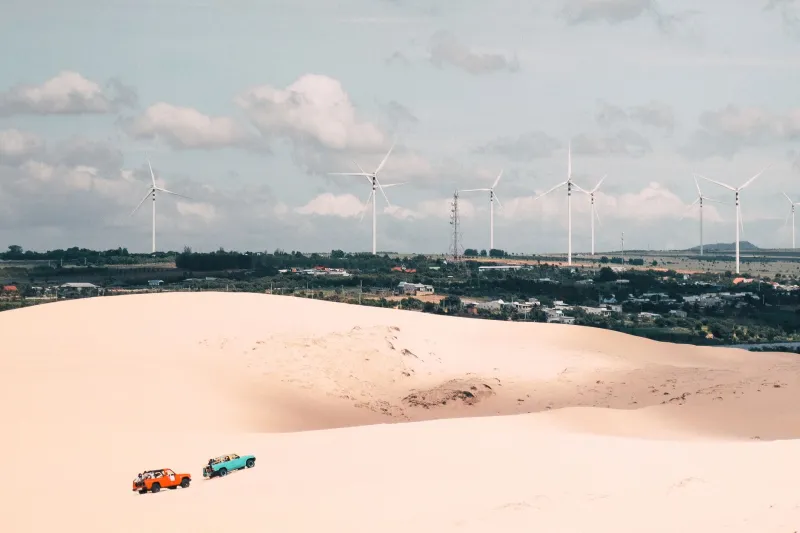
The first thing you notice is the quiet. Not silence exactly — there's still the crunch of gravel, the flex of suspension, the occasional mechanical clunk as the drivetrain does its thing. But the engine noise is gone, and it changes the experience in ways that are genuinely hard to describe until you've felt it.
Electric buggies are arriving in Britain's off-road scene faster than most people expected, and the reaction from the community is — to put it diplomatically — mixed. Enthusiasm from some quarters, deep scepticism from others, and a whole lot of questions that nobody has fully convincing answers to yet.
We spent time with early adopters, spoke to a manufacturer already betting big on electric off-road, and tried to cut through the noise to work out where this is actually heading.
The Torque Argument
If you want to start a conversation with an EV sceptic, lead with torque. Electric motors deliver maximum torque from zero RPM — there's no power curve to climb, no rev range to manage, no clutch to feather on a tricky ascent. You ask for traction, you get it, immediately.
For low-speed technical off-roading — the kind of precision crawling that defines Britain's more demanding green lanes — that characteristic is genuinely transformative. Several drivers we spoke to described the experience of driving electric over technical terrain as feeling almost telepathic, with throttle response that's both instant and, crucially, highly controllable.
"I was sceptical going in," admits Rhys Parry, a Welsh off-road instructor and club organiser based near Builth Wells who got access to an electric buggy for a full season. "I expected it to feel gimmicky. What I didn't expect was how much better the low-speed control was. On slate and rock, where you're trying to feed in power very precisely, the electric drivetrain is just more accurate than anything I've driven with a combustion engine."
That's a significant endorsement from someone who spends most of his working life in some of the most technically demanding terrain in Britain.
The Range Problem — and Why It's More Complicated Than You Think
Here's where the conversation gets harder. Range anxiety is real, and in off-road contexts, it's more acute than it is on the road.
Off-road driving is dramatically more energy-intensive than motorway cruising. Constant low-gear work, repeated full-torque demands, heavy articulation — all of it hammers the battery harder than the official range figures (typically calculated in comfortable road conditions) would suggest. A vehicle rated at 150 miles on the road might deliver 60 to 80 miles in serious off-road use. In some extreme conditions, less.
For a day at an organised venue with a charger on site, that's manageable. For a multi-day overland trip through the Scottish Highlands, it's currently a genuine logistical challenge.
The charging infrastructure outside of urban areas remains patchy at best. Rapid chargers are spreading along major routes, but head off-grid in any meaningful way and you're relying on either a portable generator — which rather defeats the clean-energy argument — or very careful route planning around slow chargers at rural hotels and campsites.
"Range is the honest conversation we have to have," says Tom Gilbertson, who runs a small electric off-road vehicle conversion workshop in the East Midlands. "We're not going to pretend it isn't a factor. But the trajectory is clear — battery density is improving every year. What's a limitation today won't be in five years. The question is whether people are willing to adapt their riding style and trip planning in the meantime."
Some are. Some aren't.
Who's Actually Buying Electric Off-Road Right Now?
The early adopter profile in Britain's electric off-road scene is interesting. It's not exclusively the environmentally motivated buyer, though they're present. There's also a significant contingent of tech enthusiasts who are drawn to the engineering novelty, and — perhaps most surprisingly — a group of serious performance-focused drivers who've been genuinely converted by the torque characteristics.
There's also a growing niche of landowners and estate managers for whom the quieter operation is a practical advantage. Running an electric vehicle across farmland or private woodland causes significantly less noise disturbance to livestock and wildlife — a real consideration for people who use off-road vehicles as working tools rather than weekend toys.
For organised off-road venues, the noise reduction is similarly appealing. Planning permission for off-road facilities in the UK is notoriously difficult to obtain and maintain, and noise complaints from neighbouring residents are a common pressure point. An electric fleet changes that calculation meaningfully.
What the Sceptics Get Right
It's worth being honest about the legitimate concerns, because they're not all just resistance to change.
Battery replacement cost is a real issue. When a combustion engine dies, a rebuild or swap is expensive but manageable within the context of a modified vehicle's economics. Battery pack replacement — when it eventually comes — can run to figures that make even seasoned off-roaders wince. Long-term ownership costs are still an unknown quantity for most buyers.
Repairability in the field is another genuine concern. A mechanical breakdown on a remote green lane can often be addressed with basic tools and ingenuity. An electrical fault is a different proposition — more likely to need specialist equipment and expertise that simply isn't available 20 miles from the nearest town.
And the cultural dimension shouldn't be entirely dismissed either. A lot of people are in this hobby because they love combustion engines — the sound, the smell, the mechanical directness of it. Electric removes something that's genuinely part of the appeal for a significant portion of the community. That's not irrational.
A Parallel Future?
The most sensible reading of where this is going might be that electric and combustion off-road don't need to replace each other — at least not yet, and possibly not fully.
Electric makes obvious sense for certain use cases: venue-based driving, shorter technical days, landowner and estate use, and anyone whose off-road life is structured around destinations with charging access. For extended wilderness travel and genuinely remote adventure, combustion remains the more practical choice for now.
What's clear is that electric off-road isn't a fad. The technology works. The experience, in the right context, is genuinely impressive. And the trajectory of improvement — in range, in charging infrastructure, in battery cost — is consistently in one direction.
The valleys of Wales and the moorlands of Scotland will hear electric motors climbing their slopes more often with each passing year. Whether that's a revolution or just an evolution depends a lot on how quickly the infrastructure catches up with the ambition.