Concrete Ghosts: The Secret Network of Former RAF Bases Hiding Britain's Best Off-Road Venues

Concrete Ghosts: The Secret Network of Former RAF Bases Hiding Britain's Best Off-Road Venues
There's something properly eerie about driving across a two-kilometre runway that hasn't seen an aircraft in forty years. The tarmac is cracked and buckled, wild grass forcing its way through every fissure, and the old control tower watches you from the treeline like a forgotten sentry. But point your buggy at the horizon and plant your foot, and suddenly none of that history matters — because you've got more usable space than you've ever had in your life.
Britain's decommissioned military airfields are one of the off-road world's best-kept secrets. Scattered across the country in surprising numbers — the RAF alone operated over 700 bases at the peak of the Second World War — these sites represent an almost absurd amount of land that's quietly been repurposed, sold off, or left to slowly return to nature. And a growing number of landowners, motorsport clubs, and event organisers have started to realise what they're sitting on.
The Scale of What's Out There
Lincolnshire alone hosted more RAF stations than any other county during the war, earning the nickname 'Bomber County.' Many of those sites — RAF Hemswell, RAF Faldingworth, RAF Blyton — are now in private hands, and some have already found second lives as industrial estates or storage facilities. But others sit largely idle, their perimeter tracks, taxiways, and hardstandings quietly crumbling under decades of British weather.
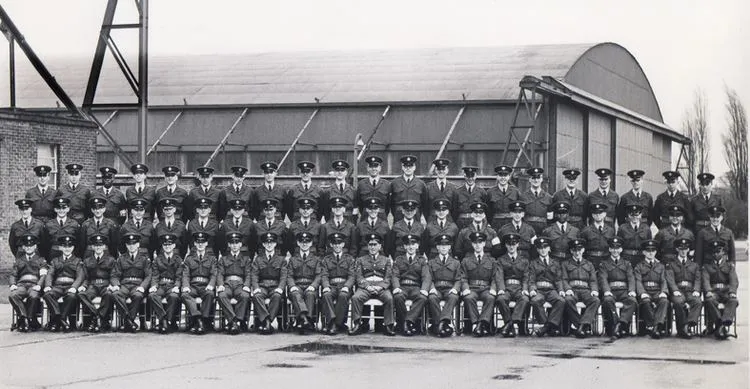 Photo: RAF Hemswell, via alchetron.com
Further north, former Cold War V-bomber stations in Yorkshire and Nottinghamshire offer similarly vast footprints. In Wales, smaller wartime relief landing grounds cling to upland plateaus, surrounded by the kind of terrain that makes off-roaders go weak at the knees. Scotland has its own collection of coastal and inland stations, many of which passed into agricultural ownership and have barely been touched since the last Spitfire rolled out of the hangar.
The sheer variety is staggering. You've got dead-flat Lincolnshire expanses where grip is a constant negotiation with standing water, Welsh hillside strips where the surrounding countryside is the main event, and lowland English sites where the scrubland that's reclaimed the old dispersal areas creates natural obstacle courses that no event organiser could design on purpose.
How Events Are Getting Onto These Sites
Accessing former military land isn't as simple as rocking up with a buggy and hoping for the best — and it shouldn't be. These sites carry complex ownership structures, occasional heritage designations, and sometimes active environmental protections, particularly where rare species have moved into the abandoned buildings and undisturbed grasslands.
The most successful route, by far, is through established motorsport clubs working directly with private landowners. Several sites around the East Midlands and Yorkshire are now hosting regular green laning meets, sprint events, and off-road driving days through exactly this kind of arrangement. The landowner gets income and managed use of otherwise idle land; the club gets a venue with extraordinary space and genuine character.
Planning permission is the big hurdle for anything resembling a formal event. Temporary event notices (TENs) cover smaller gatherings, but larger meets need proper engagement with the local planning authority — especially if there's any amplified sound, significant vehicle numbers, or overnight camping involved. Heritage England and Cadw (the Welsh equivalent) can also have a say if structures on site carry listed status, which is more common than you'd think; some of those old control towers and blast shelters are genuinely protected.
The operators getting it right are the ones treating landowners as long-term partners rather than one-off opportunities. Building relationships, being transparent about what the events involve, and leaving sites in better condition than they found them. It sounds basic, but it's the difference between a venue that stays open and one that gets shut down after a single bad weekend.
Finding the Events That Are Already Running
If you want to experience these sites without organising anything yourself, the good news is that the community is more connected than it looks from the outside. Regional 4x4 clubs — particularly those affiliated with GLASS (the Green Lane Association) or the All Wheel Drive Club — often have members who know exactly which sites are running events and when.
Forum threads on the major UK off-road communities are another goldmine, though you'll need to earn your place in the conversation before anyone starts sharing the genuinely good information. These aren't communities that advertise openly, partly because over-popularity ruins venues faster than almost anything else.
Social media, ironically, has made things both easier and harder. Easier because event organisers can reach their audiences directly; harder because viral posts about specific locations bring exactly the kind of unmanaged attention that gets gates locked and permissions revoked. The unwritten rule is pretty clear: share the experience, protect the location.
What Makes These Venues Different
Ask anyone who's driven a former airfield and they'll tell you the same thing — the sense of scale changes everything. Most off-road venues in Britain are, by necessity, relatively contained. Quarries, farm tracks, managed green lanes: they're brilliant in their own right, but they're intimate spaces. A decommissioned runway offers something genuinely different: room to build speed, room to make mistakes and recover, room to actually explore.
The mixed terrain is the other thing. A single former airfield site might offer solid concrete sections, broken tarmac that behaves almost like loose shale, waterlogged grass infields, and dense scrubland reclamation all within a few hundred metres of each other. Your buggy will work harder across a two-hour session on a site like this than it would across a full day on a purpose-built course.
And then there's the atmosphere. There's no getting around it — driving among crumbling dispersal bays and rusted Nissen huts, with the ghost of another era pressing in from every direction, is an experience that a purpose-built venue simply can't replicate. It's off-roading with a side of proper British history, and that combination is quietly irresistible.
Getting Involved Without Getting It Wrong
If you're serious about exploring this world, start by connecting with your nearest affiliated off-road club and making clear you're interested in former military land events specifically. Volunteer for site clearance days when they come up — landowners notice, and it builds the kind of goodwill that gets you invited to the good stuff.
Do your own research using resources like the Airfield Information Exchange and the Defence Infrastructure Organisation's published disposal registers, which list former MOD land that's been sold into private ownership. These are public documents, and they're a solid starting point for identifying sites in your area that might be worth a polite conversation.
Above all, respect the access that already exists. The community that's quietly built up around these venues has done so carefully, and the last thing anyone needs is a wave of newcomers treating former military land like an open invitation. These concrete ghosts are generous venues — but only if you approach them the right way.