Sacred Ground and Gravel: Chasing Britain's Lost Abbeys by Green Lane

Photo by Photo by Jeffrey Zhang on Unsplash on Unsplash
Sacred Ground and Gravel: Chasing Britain's Lost Abbeys by Green Lane
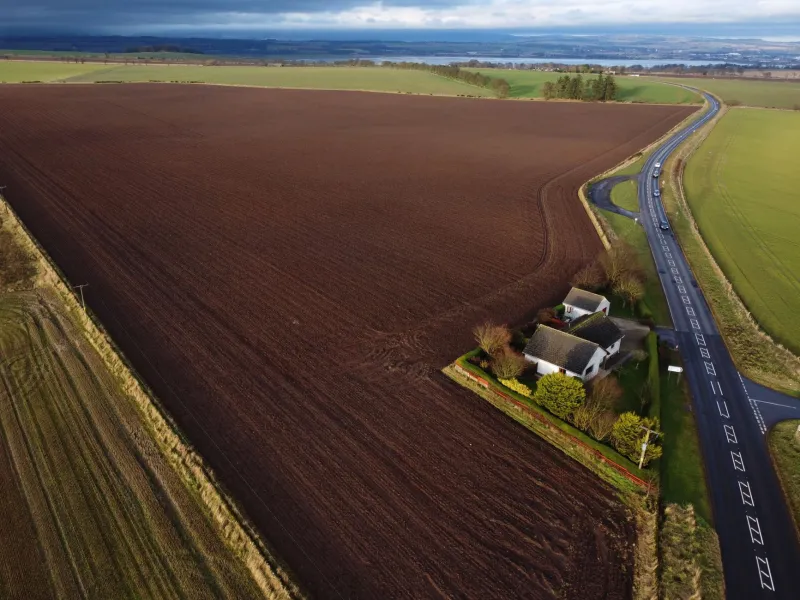
There's something properly otherworldly about cresting a ridge on a rutted green lane, mud flicking off your tyres, engine note bouncing off limestone walls — and then suddenly seeing it. A roofless nave. A collapsed tower. Eight hundred years of stone, standing there in the middle of nowhere like the landscape just forgot to swallow it whole.
Britain is absolutely riddled with these places. Dissolved monasteries, abandoned priories, forgotten chapels clinging to hillsides that haven't seen a tourist bus in decades. Some of them are signposted. A lot of them aren't. And the best ones — the genuinely wild, genuinely remote ones — are only reachable if you're willing to leave the tarmac behind.
Welcome to the gravel pilgrimage.
Why the Ruins Worth Finding Are Never on the B-Road
Henry VIII did British off-roaders an accidental favour when he dissolved the monasteries in the 1530s. The religious houses that survived were usually the ones close to towns and trade routes — the ones that could be repurposed, rebuilt, or at least maintained. The ones that fell into true ruin were typically the remote communities: the Cistercian houses that deliberately sought isolation, the hermit chapels on moorland edges, the tiny cells perched on clifftops above crashing North Sea swells.
Those are exactly the places that reward proper off-road access. English Heritage and Cadw maintain the famous ones — your Tinterns, your Fountains, your Rievaulxes — and they're spectacular, genuinely. But turn up to Rievaulx on a bank holiday and you're sharing the experience with four hundred other people and a National Trust café. There's another tier of ruins entirely that most people never reach.
Places like Coverham Abbey in the Yorkshire Dales, accessible via a green lane that drops off the high moor into Coverdale — a valley so quiet you can hear the river from half a mile away. Or Egglestone Abbey near Barnard Castle, which sits above the Tees on a track that gets properly agricultural come November. Or the scattered remnants of Valle Crucis in North Wales, where the approach from the west via Horseshoe Pass and its connecting byways gives you a completely different relationship with the site than the car park ever could.
Permissions, Paperwork, and Getting It Right
Before we go any further: this isn't a charter to drive anywhere you fancy. Britain's byway network is a legal framework, and using it properly is what keeps it open for everyone.
Byways Open to All Traffic (BOATs) are your friend here. These are public rights of way where motorised vehicles are legally permitted, and they're the backbone of any responsible off-road route to remote destinations. The Byway Open to All Traffic is distinct from a bridleway or footpath — get this wrong and you're not just breaking the law, you're handing ammunition to the people who want these routes closed.
The Green Lane Association (GLASS) and the Trail Riders Fellowship both maintain excellent resources for checking route legality before you set off. Ordnance Survey maps are essential — the 1:25,000 Explorer series marks byways clearly. And if a route crosses private land, even if it's technically a public right of way, a quick conversation with the landowner goes a long way. Most farmers respond well to someone who's clearly done their homework and isn't going to leave gates open or churn up a field margin.
Some of the best ruin-adjacent routes are on Forestry England land, where a permit system operates for motorised access. These are worth pursuing — the tracks are often well-maintained, the scenery is extraordinary, and the ruins that sit within or adjacent to managed forest are frequently the least-visited of all.
Three Routes Worth Planning Around
The North York Moors Monastic Circuit The moors are a BOAT paradise, and the concentration of medieval religious sites here is remarkable. A well-planned day can take you from the ruins of Rosedale Priory — just a few fragments left, tucked into the valley floor — across the high moor via legal byways to the outskirts of Whitby, where the abbey ruins on the clifftop are genuinely one of the most dramatic sights in northern England. The rough tracks across Fylingdales Moor in a capable buggy or side-by-side are worth the journey alone. Allow a full day and pack proper waterproofs.
The Welsh Marches Abbey Trail The border country between England and Wales was contested territory for centuries, and the religious houses here reflect that turbulent history — many were attacked, rebuilt, and eventually abandoned. A route linking Wigmore Abbey (a genuine hidden gem in north Herefordshire, accessible via farm tracks with landowner permission) through to the Shropshire hills and the ruins at Haughmond offers a mix of terrain and history that's hard to beat. The lanes here are narrow, the gradients deceptive, and the views across the Marches are quietly spectacular.
Galloway's Forgotten Abbeys Southwest Scotland is chronically underrated as off-road territory. The Galloway Forest Park contains legal motorised trails, and the wider region around Kirkcudbright and Wigtown is scattered with ruined religious sites that see almost no visitors. Sweetheart Abbey near Dumfries is the obvious anchor point — it's managed and accessible — but the surrounding area rewards exploration via the network of forest roads and byways that thread through this corner of Scotland. Combine with a night camping under the Dark Sky Park designation and you've got something genuinely memorable.
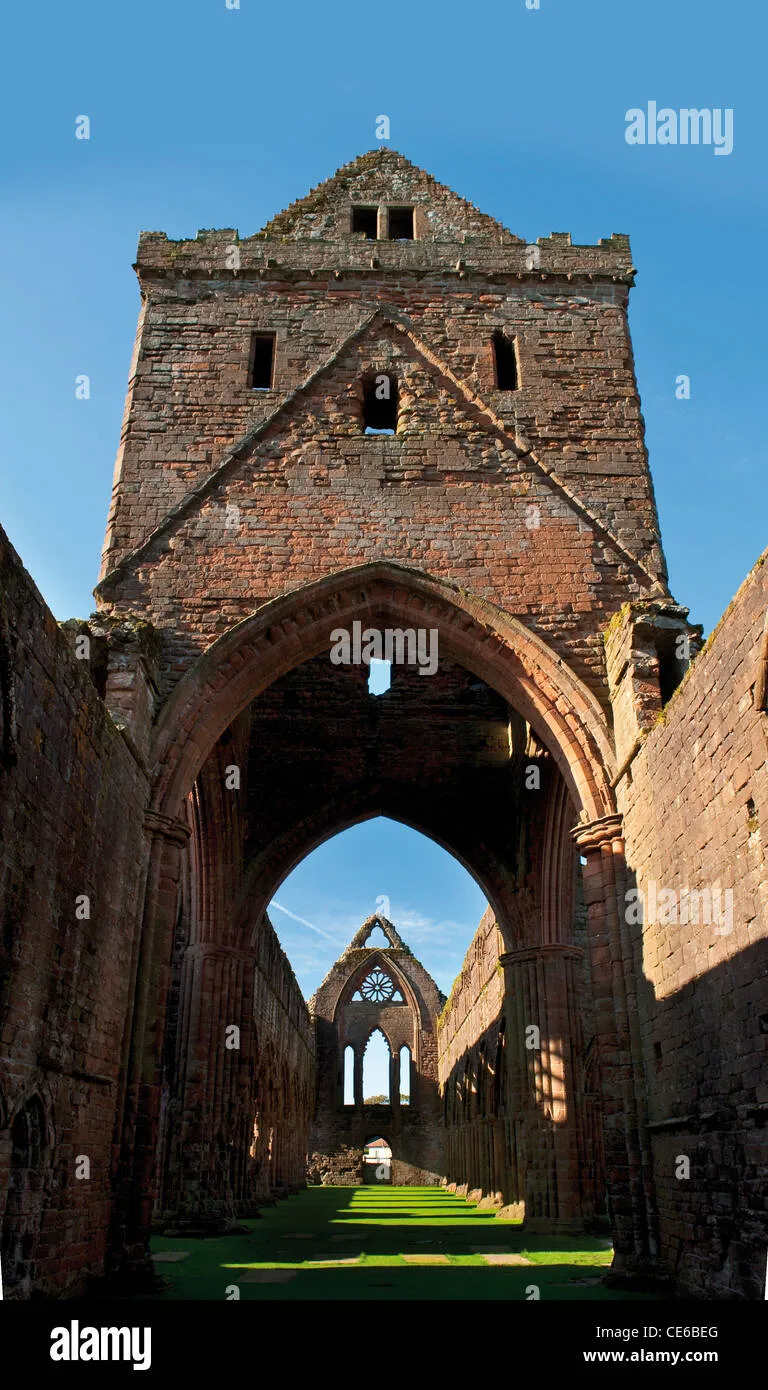 Photo: Sweetheart Abbey, via c8.alamy.com
What to Drive, and How to Prepare
The routes that lead to genuinely remote ruins tend to be demanding enough that a standard SUV will struggle. Proper ground clearance matters. A buggy or side-by-side with a snorkel is ideal for the wetter approaches, particularly in autumn and winter when these tracks are at their most atmospheric — and their most punishing.
Carry recovery gear as standard. A kinetic rope, a decent hi-lift jack, and a folding shovel cover most situations. A GPS device loaded with OS mapping is non-negotiable — phone signal in these areas is often nonexistent. And tell someone where you're going. These aren't the kind of places where you want to be waiting for a rescue without anyone knowing your rough location.
On the historical side: bring a decent guidebook or download the Historic England and Cadw apps before you lose signal. Standing in the middle of a ruined chapter house is a completely different experience when you understand what you're looking at.
The Journey Is the Ritual
There's a reason the medieval pilgrimage was always about the road as much as the destination. The effort of getting somewhere — the discomfort, the navigation, the unexpected diversions — changes your relationship with what you find at the end of it.
Arriving at a forgotten abbey after two hours of green laning, with mud on your boots and a sky full of weather rolling in off the moors, hits differently than pulling into a car park. The ruins feel earned. The silence feels deeper. The history feels closer.
Britain's off-road network and Britain's monastic heritage were both built by people who understood that some things worth having require proper effort to reach. Turns out those two legacies fit together rather well.
Get the maps out. Find the ruins. Do the miles.